
Breaking the Atmosphere of Lo-Debar Through Covenant and Sacrifice
Key Scriptures
-
2 Samuel 9:1–13 – David remembers his covenant with Jonathan.
-
1 Samuel 20:14–17 – The covenant between David and Jonathan.
-
2 Samuel 4:4 – Mephibosheth’s unfortunate condition.
-
Hebrews 9:14–15 – Jesus, the Mediator of the New Covenant.
-
Ephesians 2:13 – Brought near through the blood of Christ.
Introduction
There are seasons in life when a person’s circumstances appear to contradict their identity, inheritance, and potential. A person may have a royal background but live in an ordinary environment. Someone may have a great inheritance but experience a season of limitation. Another may have a promising beginning but find themselves in a place they never imagined.
The story of Mephibosheth in 2 Samuel 9 presents one of the most remarkable illustrations of this experience.
Mephibosheth was the son of Jonathan and grandson of King Saul. By family background, he belonged to the royal household. Yet, following the death of Saul and Jonathan, he found himself living in Lo-Debar, away from the palace and the privileges associated with his family.
But something remarkable happened. David remembered his covenant with Jonathan and asked whether anyone remained from Saul’s household to whom he could show kindness.
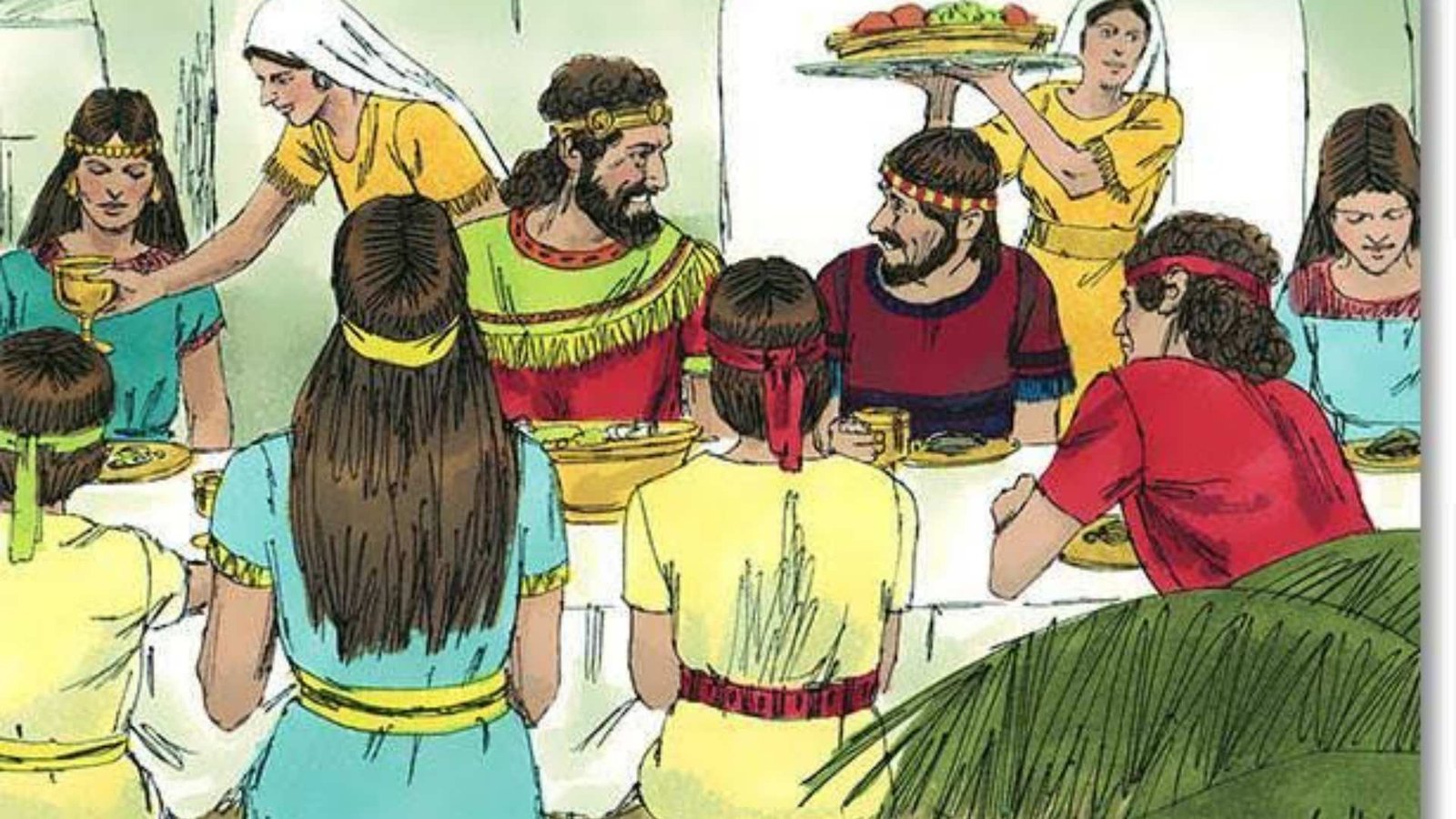
Mephibosheth was eventually brought before the king and given a place at his table.
His story reveals a powerful biblical principle: A person’s present condition does not necessarily determine the final chapter of their story.
In this teaching, we explore how covenant, sacrifice, faithfulness, and the grace of God can transform the circumstances of a person’s life.
1. Understanding the Atmosphere of Lo-Debar
Scripture: 2 Samuel 9:4–5
Mephibosheth was living in Lo-Debar, in the house of Machir, when David sent for him.
Lo-Debar was a geographical location east of the Jordan. Its name is often understood as meaning something like “no pasture” or “without pasture,” although the exact linguistic interpretation is debated.
For preaching purposes, Lo-Debar can serve as an illustration of limitation, obscurity, and a life far removed from one’s former privileges.
Mephibosheth’s circumstances were particularly difficult. He had become lame in both feet following an accident during the flight from the news of Saul and Jonathan’s deaths (2 Samuel 4:4).
He had experienced loss, displacement, and a dramatic change in his family’s position.
His story reminds us that difficult circumstances can affect how people see themselves and their future.
However, we must remember that Lo-Debar was not a spiritual curse, and Scripture does not say that every person experiencing hardship is under a demonic atmosphere.
The important lesson is that difficult seasons do not have to become permanent definitions of our lives.
Your location may describe your present circumstances, but it does not have to define your entire destiny.
2. The Power of Covenant: David Remembered Jonathan
Scripture: 1 Samuel 20:14–17; 2 Samuel 9:1
The turning point in Mephibosheth’s story began with a covenant made years earlier.
David and Jonathan had established a deep relationship of loyalty and commitment. In 1 Samuel 20:14–17, Jonathan asked David to show kindness to his family, even after Jonathan was gone.
David agreed.
Years later, after becoming king, David asked:
“Is there yet any that is left of the house of Saul, that I may shew him kindness for Jonathan’s sake?” (2 Samuel 9:1).
This question is central to the story.
David was not searching for someone who could offer him a political advantage. He was looking for an opportunity to honour a covenant commitment.
Mephibosheth’s circumstances had changed, but David had not forgotten his promise.
This reveals the significance of covenant in Scripture. A covenant is more than a casual agreement; it establishes a serious commitment and relationship.
Sometimes, the greatest turning point in a person’s life is connected to a commitment that was made long before their present circumstances.
3. Covenant Can Speak Beyond Your Present Condition
Scripture: 2 Samuel 9:3–7
When David discovered that Mephibosheth was still alive, he instructed that he be brought to the palace.
Imagine the emotions surrounding that moment.
Mephibosheth had lived through the downfall of his grandfather’s kingdom. He may have feared what a new king would do to a surviving member of Saul’s family.
When he appeared before David, he bowed down and described himself as a dead dog.
Yet David responded with kindness.
He told him not to be afraid and promised to restore the land that had belonged to Saul. He also invited him to eat regularly at the king’s table.
Notice the contrast:
-
He came expecting uncertainty but received kindness.
-
He came from Lo-Debar but was brought into the palace.
-
He described himself as insignificant but was treated with honour.
-
He had experienced loss but received an opportunity for restoration.
The covenant between David and Jonathan became the basis for David’s kindness towards Mephibosheth.
This is a beautiful illustration of how faithfulness can extend its influence beyond the original parties involved.
4. Sacrifice: The Cost of Keeping Covenant
Scripture: 1 Samuel 20:30–34; 2 Samuel 9:1–7
Covenant and sacrifice are closely connected in several biblical accounts.
Jonathan’s loyalty to David was not without personal cost. Although Jonathan was the son of King Saul and could naturally have expected to inherit the throne, he recognised God’s purpose concerning David.
In 1 Samuel 20:30–34, Jonathan defended David against Saul’s hostility, even when doing so exposed him to his father’s anger.
His loyalty demonstrated that covenant commitment can require difficult decisions and personal sacrifice.
David also honoured his commitment to Jonathan after Jonathan’s death. He used his royal position to extend kindness to Jonathan’s surviving son.
This teaches us that covenant faithfulness is not merely about making promises; it is also about honouring them when doing so requires something from us.
However, the story does not say that Jonathan made a financial or sacrificial offering to purchase Mephibosheth’s restoration.
The sacrifice here is seen in loyalty, commitment, and the willingness to honour a relationship.
A covenant that costs nothing in commitment may reveal very little about the faithfulness of those who establish it.
5. The King Sent for Mephibosheth
Scripture: 2 Samuel 9:5–7
One of the most beautiful aspects of this story is that Mephibosheth did not have to discover his way back to the palace.
David sent for him.
This is an important distinction.
Mephibosheth did not initiate the meeting. The king made the decision to seek him out and extend kindness to him.
This gives us a powerful picture of grace.
In the Gospel, we discover that God did not wait for humanity to become worthy of His love before providing the way of salvation.
Romans 5:8 tells us that while we were still sinners, Christ died for us.
Our relationship with God is not built on our ability to earn His favour. It is established through His grace, revealed through Jesus Christ.
Just as David extended kindness to Mephibosheth, the Gospel reveals God’s initiative in providing redemption for humanity.
6. The Table Changed His Position
Scripture: 2 Samuel 9:7, 10–13
David did more than provide temporary assistance to Mephibosheth.
He restored Saul’s land to him and instructed Ziba and his household to cultivate it. He also gave Mephibosheth a permanent place at the royal table.
Verse 13 records that Mephibosheth lived in Jerusalem and continually ate at the king’s table.
His physical condition had not changed. He was still lame in both feet.
Yet his position had changed.
This is an important spiritual lesson.
Sometimes restoration does not mean that every physical limitation disappears immediately. It may mean that God provides a new opportunity, a new relationship, renewed dignity, or a different way forward.
Mephibosheth did not need to become physically perfect before he could enjoy the king’s kindness.
The king’s table was not a reward for Mephibosheth’s physical ability; it was an expression of covenant kindness.
7. Jesus Christ: The Greater Covenant and the Greatest Sacrifice
Scripture: Hebrews 9:14–15; Luke 22:20; Ephesians 2:13
While David’s covenant with Jonathan gives us a beautiful picture of covenant kindness, the greater revelation of covenant and sacrifice is found in Jesus Christ.
The Old Testament contains several covenants through which God progressively revealed His redemptive purposes.
But the New Covenant was established through the blood of Jesus Christ.
During the Last Supper, Jesus declared:
“This cup is the new testament in my blood, which is shed for you.” (Luke 22:20).
Through His death and resurrection, Jesus provided the way for humanity to be reconciled to God.
Ephesians 2:13 explains that those who were once far away have been brought near through the blood of Christ.
This is the greater message.
We were not brought near to God through our financial offerings, personal sacrifices, religious performances, or achievements. We were brought near through the sacrifice of Jesus.
The sacrifice of Christ is sufficient for our salvation. Our personal sacrifices are responses of faith and obedience, not replacements for His finished work.
The greatest atmosphere-breaking sacrifice in human history was made at Calvary, where Jesus gave Himself to reconcile humanity to God.
8. Leaving Lo-Debar: A Life That Responds to Grace
Scripture: Romans 12:1–2; Ephesians 2:8–10
Mephibosheth’s story challenges us to consider how we respond when kindness is extended to us.
When David called him, he responded and came before the king.
Similarly, when we encounter the grace of God through Jesus Christ, we are called to respond through faith, repentance, obedience, and a transformed life.
Romans 12:1 encourages believers to present their bodies as living sacrifices, holy and acceptable to God.
This is our response to the mercy we have received.
We do not sacrifice to purchase God’s covenant. We surrender our lives because we have received His grace.
Our time, resources, abilities, relationships, and service should reflect our commitment to Christ.
Leaving the atmosphere of Lo-Debar, therefore, can be understood as moving beyond a life defined by fear, hopelessness, shame, and limitation into a life shaped by God’s grace, truth, and purpose.
Conclusion: The Covenant That Speaks Louder Than Your Circumstances
Mephibosheth’s story is a remarkable reminder that circumstances do not always determine outcomes.
He was living away from the palace, carrying the consequences of a tragic past, when David remembered his covenant with Jonathan.
The king sent for him, restored his inheritance, and gave him a place at the royal table.
The story teaches us about covenant faithfulness, sacrifice, kindness, and restoration.
But above all, it points us towards Jesus Christ, whose sacrifice established the New Covenant and opened the way for humanity to be reconciled to God.
Do not allow your present circumstances to become the final definition of your life. Respond to God’s grace, remain faithful to His Word, and allow His purposes to shape your future.
Lo-Debar may describe where you have been, but it does not have to define where your story ends.
Prayer
Heavenly Father,
Thank You for Your faithfulness, mercy, and covenant love. Thank You for the sacrifice of Jesus Christ through whom we have received forgiveness and reconciliation.
Help me not to become defined by my past, failures, limitations, or present circumstances. Teach me to walk in faith, honour my commitments, and live according to Your purpose.
Where there is discouragement, renew my hope. Where there is brokenness, bring healing. Where there are opportunities to serve, give me the courage to respond faithfully.
May my life reflect the grace I have received through Jesus Christ.
In Jesus’ mighty name, Amen.
Scriptures for Further Study
-
1 Samuel 18:1–4 – The relationship between David and Jonathan.
-
1 Samuel 20:12–17 – Jonathan’s covenant with David.
-
2 Samuel 4:4 – Mephibosheth’s unfortunate accident.
-
2 Samuel 9:1–13 – David’s kindness towards Mephibosheth.
-
Psalm 89:3–4 – God’s covenant with David.
-
Romans 5:6–11 – Christ’s sacrifice for humanity.
-
Ephesians 2:11–22 – Brought near through Christ.
-
Hebrews 9:11–15 – Jesus, the Mediator of the New Covenant.