
EVERYTHING BEAUTIFUL IN HIS TIME
Understanding Divine Timing, the Mystery of Waiting, and the Beauty of God’s Process
Key Scriptures: Ecclesiastes 3:1–11; Habakkuk 2:1–3; Genesis 21:1–7; Isaiah 60:22
Introduction: When God’s Timing Does Not Agree with Yours
One of the greatest challenges in the walk of faith is learning to trust God when His timing does not agree with our expectations. We often know what we desire, we can imagine what the future should look like, and sometimes we even believe we have received a promise from God. Yet between the expectation and the manifestation, there is a season called waiting.
It is in this season that faith is tested, character is exposed, patience is developed, and our understanding of God is deepened.
Ecclesiastes 3:11 declares that God “hath made every thing beautiful in his time” (KJV). These words reveal a profound truth about the relationship between divine sovereignty and human experience. God sees the whole picture, while we often see only the part of the story unfolding before us.
A season that appears incomplete to us may still be part of a larger process. A door that has not opened may require preparation, a desire that has not been fulfilled may need to be reconsidered, and an opportunity that arrives unexpectedly may demand wisdom rather than excitement.
However, the scripture does not teach that every personal desire will eventually be fulfilled exactly as we imagine. Ecclesiastes speaks honestly about the changing seasons of life, including joy, grief, gain, and loss. Its message is not that every circumstance will become pleasant, but that God sees the whole of human existence in ways we cannot fully comprehend.
The beauty of God’s timing is not merely that He can give us what we desire, but that His wisdom exceeds our understanding of what we need and when we need it.
1. God Created Life to Function in Seasons
Scripture: Ecclesiastes 3:1–8; Genesis 8:22
“To every thing there is a season, and a time to every purpose under the heaven” (Ecclesiastes 3:1, KJV).
Solomon begins by establishing that life contains different seasons. There is a time to plant and a time to harvest, a time to mourn and a time to rejoice, a time to keep and a time to let go.
These contrasts reveal that life is not a single uninterrupted experience. We move through different circumstances, responsibilities, opportunities, and challenges. Wisdom requires recognising that the appropriate response in one season may not be the appropriate response in another.
A farmer understands this principle. Planting and harvesting are both essential, but they cannot be performed in the same way or at the same stage of the agricultural process. The farmer must recognise the season and act accordingly.
Likewise, there are seasons when we must move boldly, seasons when we must learn patiently, seasons when we must build quietly, and seasons when we must release what no longer belongs to our responsibilities.
The danger is that we sometimes judge a season by the standards of another. We expect harvest while neglecting the work of planting. We demand public recognition while avoiding private preparation. We desire expansion without first establishing the discipline required to sustain it.
Every season carries its own wisdom, responsibility, and demand.
The question is not simply, “When will my season change?” It is also, “What does faithfulness require of me in the season I am presently occupying?”
2. The Mystery of God’s Time
Scripture: Ecclesiastes 3:11; Habakkuk 2:2–3
Ecclesiastes 3:11 says that God has made everything beautiful in its time. The phrase points us toward the wisdom of God’s timing, but it also reminds us of the limits of human understanding. The same verse observes that people cannot fully comprehend the work God does from beginning to end.
We frequently evaluate events according to what we can see immediately. If something has not happened, we may conclude that nothing is happening. If a plan has been delayed, we may assume that the opportunity has been lost. If another person advances before us, we may begin to question our own journey.
But visible progress is not the only measure of meaningful progress.
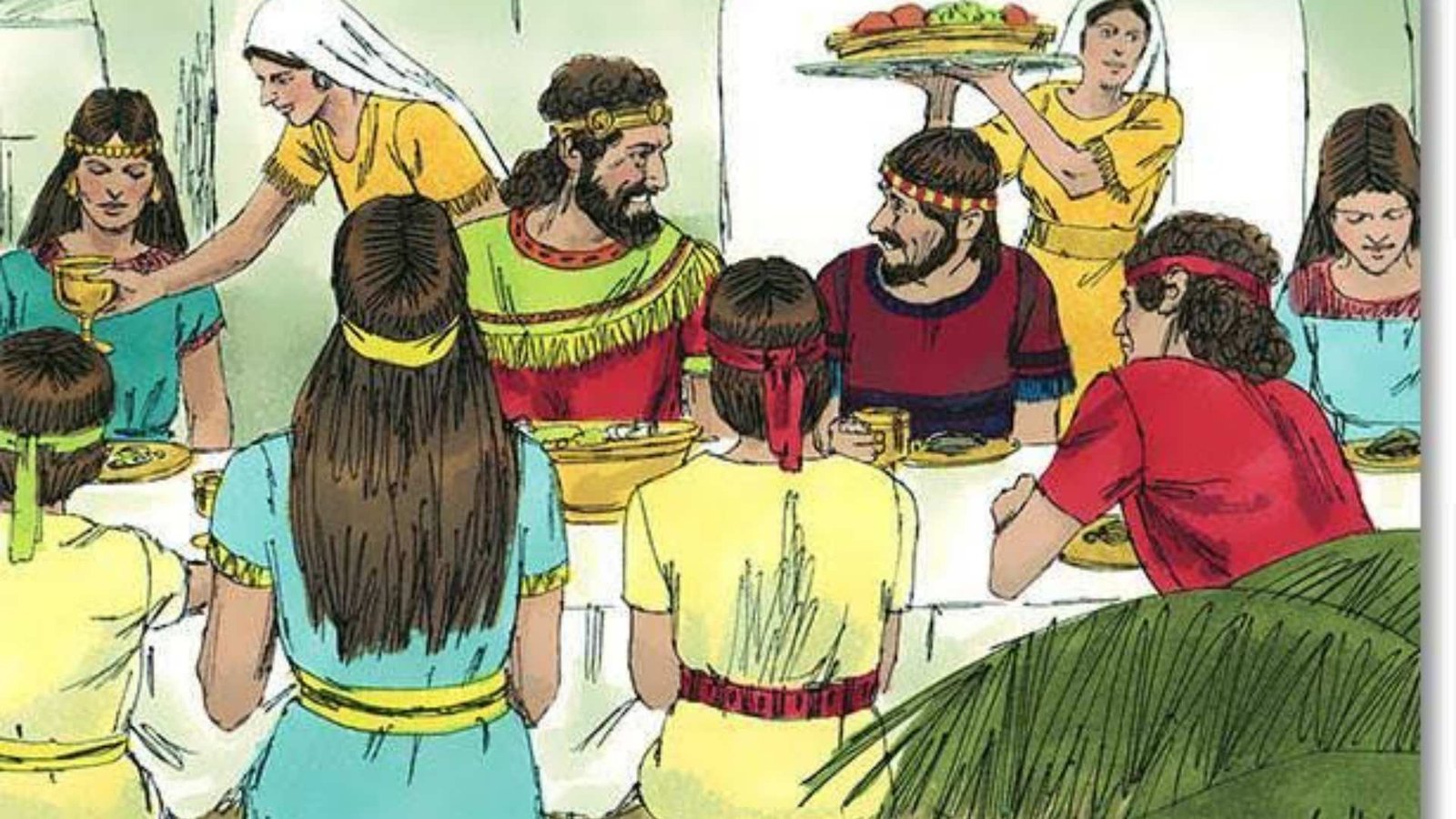
Consider the story of Abraham and Sarah. God promised Abraham that he would become the father of many nations, yet the fulfilment of the promise concerning Isaac did not occur immediately (Genesis 17:15–21; 21:1–7). Their story includes long waiting, human weakness, and moments when they struggled to understand how God’s promise could become reality.
When Isaac was eventually born, the event demonstrated God’s faithfulness to His specific promise. It was not a formula that guarantees every believer will receive a desired outcome after a certain period.
Habakkuk 2:3 similarly teaches that a vision has an appointed time and calls the reader to wait for it. In its original context, the prophet was grappling with injustice and God’s coming response. The passage encourages patient trust in God’s word rather than providing a guarantee for every personal ambition.
Divine timing therefore requires humility. We may recognise what Scripture clearly promises, but we must be careful not to label every personal plan a divine promise.
Faith trusts God’s character even when it cannot fully explain God’s timetable.
3. The Waiting Season Is Not Permission to Become Idle
Scripture: Proverbs 6:6–8; Colossians 3:23–24
One misunderstanding about divine timing is the belief that if God has ordained something, we need only wait for it to happen.
Biblical faith does not encourage passivity. It calls us to trust God while remaining faithful in our responsibilities.
Joseph’s life provides a useful illustration. After being sold into Egypt, he served faithfully in Potiphar’s household. Later, while imprisoned, he continued to serve and demonstrated the ability to interpret dreams (Genesis 39–40). His circumstances were difficult, but he did not abandon the responsibilities available to him.
The narrative does not suggest that Joseph could control when he would be released. It does show that his conduct in difficult circumstances mattered.
There is a difference between waiting for God and using God’s timing as an excuse to avoid preparation.
If you are trusting God for business growth, develop your competence, understand your market, manage your resources, and serve your customers well. If you desire greater responsibility, cultivate the discipline and character that responsible leadership requires. If you are praying for spiritual growth, make room for Scripture, prayer, fellowship, obedience, and service.
Waiting does not mean doing nothing. It means acting faithfully without pretending that you control every outcome.
While you wait for the door to open, prepare to walk through it wisely.
4. When the Process Becomes Painful
Scripture: Romans 5:3–5; James 1:2–4
Not every waiting season feels peaceful. Some are marked by disappointment, financial pressure, rejection, unanswered questions, or the painful experience of watching others move forward while our own circumstances appear unchanged.
Romans 5:3–5 describes how suffering can produce perseverance, character, and hope. James 1:2–4 similarly teaches that the testing of faith can develop perseverance.
These passages do not tell us to pretend suffering is pleasant. They show that suffering need not be spiritually fruitless.
There is a difference between saying that God can bring good out of a painful experience and claiming that every painful event was directly caused by God for a specific lesson. Scripture supports the first conviction without requiring us to assume the second in every circumstance.
Joseph’s brothers intended him harm, yet God worked through the events of Joseph’s life to preserve many people (Genesis 50:20). The evil of their actions was not transformed into goodness simply because God brought a greater outcome from the story.
This distinction matters because it protects us from glorifying abuse, injustice, or preventable suffering. We may need to leave a harmful environment, seek counsel, address wrongdoing, or ask for practical help while continuing to trust God.
The beauty of divine timing is not a command to remain in every painful situation indefinitely. Sometimes wisdom calls for endurance; sometimes it calls for change.
The challenge is to remain faithful without allowing pain to become the sole interpreter of our lives.
A difficult season can shape your life without having the final authority to define it.
5. Do Not Compare Your Season with Another Person’s Season
Scripture: John 21:20–22; Galatians 6:4–5
Comparison can make waiting more painful than it needs to be.
You may see someone younger than you become successful, another person receive an opportunity you desired, or a friend appear to experience the very breakthrough for which you have been praying. Without careful reflection, their progress can become a reason to question your worth or resent their success.
In John 21, Peter asked Jesus about the future of another disciple. Jesus redirected Peter’s attention to his own responsibility: “What is that to thee? follow thou me” (John 21:22, KJV).
Jesus was not dismissing Peter’s curiosity merely for the sake of it. He was teaching Peter not to make another person’s path the centre of his own obedience.
The same principle applies to us. Another person’s achievement does not automatically mean that God has abandoned you. Their opportunity may differ from yours, their responsibilities may be different, and their visible success may not reveal the full reality of their lives.
This does not mean that every difference in outcome has a mysterious spiritual explanation. Some people have different resources, relationships, experiences, and opportunities. We should learn from others where appropriate without turning their lives into a measuring instrument for our own worth.
Celebrate the success of others. Learn what can be learned. Correct what needs correcting. Then return to the work and responsibilities entrusted to you.
Comparison makes another person’s season the judge of your own; wisdom teaches you to remain faithful to your assignment.
6. The Danger of Forcing What Is Not Ready
Scripture: 1 Samuel 13:8–14; Proverbs 19:2
Impatience can lead us to force outcomes before we have the wisdom, character, or circumstances to sustain them.
In 1 Samuel 13, King Saul faced a military crisis while waiting for Samuel. Under pressure, he offered the burnt offering himself rather than waiting as instructed. Samuel confronted Saul over his disobedience.
The passage is not a general rule that every delay should be accepted without action. It concerns Saul’s specific responsibility and his failure to obey God’s instruction in that situation. Yet it illustrates a wider principle: pressure does not make disobedience wise.
Sometimes we force relationships because we fear being alone. We accept unsuitable business partnerships because we fear missing an opportunity. We rush into expansion before establishing a sound financial foundation. We make decisions from desperation and then call the results destiny.
The presence of an opportunity does not automatically mean we are ready for it.
Patience is not the absence of ambition. It is ambition governed by wisdom.
There are times when decisive action is necessary, and delaying too long can also be a mistake. The goal is not to wait indefinitely for a perfect feeling or supernatural sign. It is to make responsible decisions in the light of Scripture, sound counsel, evidence, and the responsibilities already before us.
Before forcing an outcome, ask whether you are acting from faith and wisdom or from fear of being left behind.
What is gained through impatience may become difficult to sustain without the preparation that patience would have developed.
7. God Can Make Beauty Out of What You Did Not Choose
Scripture: Romans 8:28; Genesis 50:20
Romans 8:28 is often quoted as a general promise that everything will work out exactly as we desire. Its context is more profound and more carefully defined.
Paul writes to believers who experience suffering and weakness, and he points to God’s purpose for those who love Him and are called according to His purpose. The following verse, Romans 8:29, explains this purpose in terms of being conformed to the image of God’s Son.
The promise is not that every event is good in itself. Betrayal, injustice, grief, and sin remain real evils. Rather, God is able to work through the circumstances of life toward His redemptive purpose.
Joseph’s story illustrates this truth. His brothers’ actions were wrong, yet those actions did not prevent God from using Joseph’s position in Egypt to preserve lives during famine.
In our own lives, we may not understand why a particular opportunity ended, why a relationship changed, or why a season unfolded differently from our expectations. We should not invent an explanation merely to make the experience feel easier.
But we can trust that pain need not render our lives meaningless. We can learn, heal, grow in compassion, make wiser decisions, and continue serving God and others.
Sometimes the beauty that emerges is a new opportunity. Sometimes it is greater maturity, a restored relationship, a clearer sense of responsibility, or the courage to begin again. Sometimes the full meaning remains beyond our understanding.
God’s faithfulness is not limited to giving us the ending we imagined.
8. The Beauty of God’s Time Is Ultimately Revealed in Christ
Scripture: Galatians 4:4–5; Ephesians 1:9–10
The Christian understanding of divine timing reaches its centre in the person and work of Jesus Christ.
Galatians 4:4 says that when the fullness of time had come, God sent His Son, born of a woman and born under the law, to redeem those under the law. Paul presents the coming of Christ as part of God’s saving purpose, accomplished at the time He appointed.
The Gospel is not simply a promise that our personal plans will unfold at the right moment. It is the announcement that God has acted in history to reconcile sinners to Himself through Jesus Christ.
Jesus’ earthly life included years of obscurity, rejection, suffering, and finally the cross. His crucifixion appeared to be defeat, but the resurrection revealed God’s victory over sin and death. The cross was not beautiful because cruelty and injustice were good; it was central to God’s saving work because Christ willingly gave Himself for humanity.
This gives believers a deeper foundation for patience. Our hope does not rest only on the expectation that circumstances will improve. It rests on Christ, who has secured redemption and promises the final renewal of all things.
Some prayers may receive the answers we desire. Others may unfold differently, and some questions may remain unanswered in this life. Christian hope does not deny these realities. It anchors us in the faithfulness of God revealed through Jesus.
The ultimate beauty is not merely that God may change our circumstances. It is that, through Christ, He is making a people who belong to Him and will share in His eternal kingdom.
The greatest evidence of God’s faithfulness is not that every season becomes easy, but that His redemptive purpose stands firm through every season.
Conclusion: Trust the One Who Sees the Whole Story
“Everything beautiful in His time” is more than a comforting phrase. It is an invitation to live with humility, patience, discernment, and hope.
Ecclesiastes reminds us that life contains different seasons and that our understanding is limited. Joseph teaches us that injustice does not necessarily have the final word. Habakkuk calls us to wait faithfully for God’s appointed purpose. The New Testament directs our hope toward Jesus Christ, in whom God’s saving purpose has been revealed.
Therefore, do not despise the season you are in, but neither should you assume that every hardship must be endured without change. Learn what you can, do what is right, seek wisdom, take responsible action, and entrust what you cannot control to God.
If you are planting, plant faithfully. If you are building, build wisely. If you are grieving, allow yourself to grieve and seek the support you need. If you are experiencing an opportunity, steward it responsibly. And if you are waiting, do not surrender your life to the waiting itself.
Your responsibility is not to control every season. It is to remain faithful to God through the seasons you encounter.
You may not understand the timing of every chapter, but you can continue to trust the God who has revealed Himself through Jesus Christ.
Prayer
Heavenly Father, teach me to trust You through every season of my life. Give me patience when I must wait, wisdom when I must act, courage when I must change direction, and humility when I do not understand what is happening.
Keep me from the trap of comparison and the temptation to force outcomes out of fear. Help me recognise the responsibilities before me and remain faithful in the work You have entrusted to me. When I experience disappointment, strengthen my heart. When I face uncertainty, guide me through Your Word and wise counsel.
Above all, anchor my hope in Jesus Christ, whose death and resurrection reveal Your saving purpose and unfailing faithfulness. Help me live with confidence in You, not because I understand every season, but because I know that my life rests in Your hands. In Jesus’ name, Amen.
Scriptures for Further Study
-
Ecclesiastes 3:1–15 — The seasons of life and the limits of human understanding.
-
Genesis 21:1–7 — The fulfilment of God’s promise concerning Isaac.
-
Genesis 39:1–23 — Faithfulness in difficult circumstances.
-
Genesis 50:15–21 — God’s providence amid human wrongdoing.
-
Habakkuk 2:1–4 — Waiting faithfully for God’s word.
-
Psalm 27:13–14 — Courage and patience while waiting for the Lord.
-
Romans 5:1–5 — Suffering, perseverance, character, and hope.
-
Romans 8:18–30 — Present suffering and God’s redemptive purpose.
-
Galatians 4:1–7 — Christ coming in the fullness of time.
-
Hebrews 10:35–39 — Confidence, endurance, and faith.