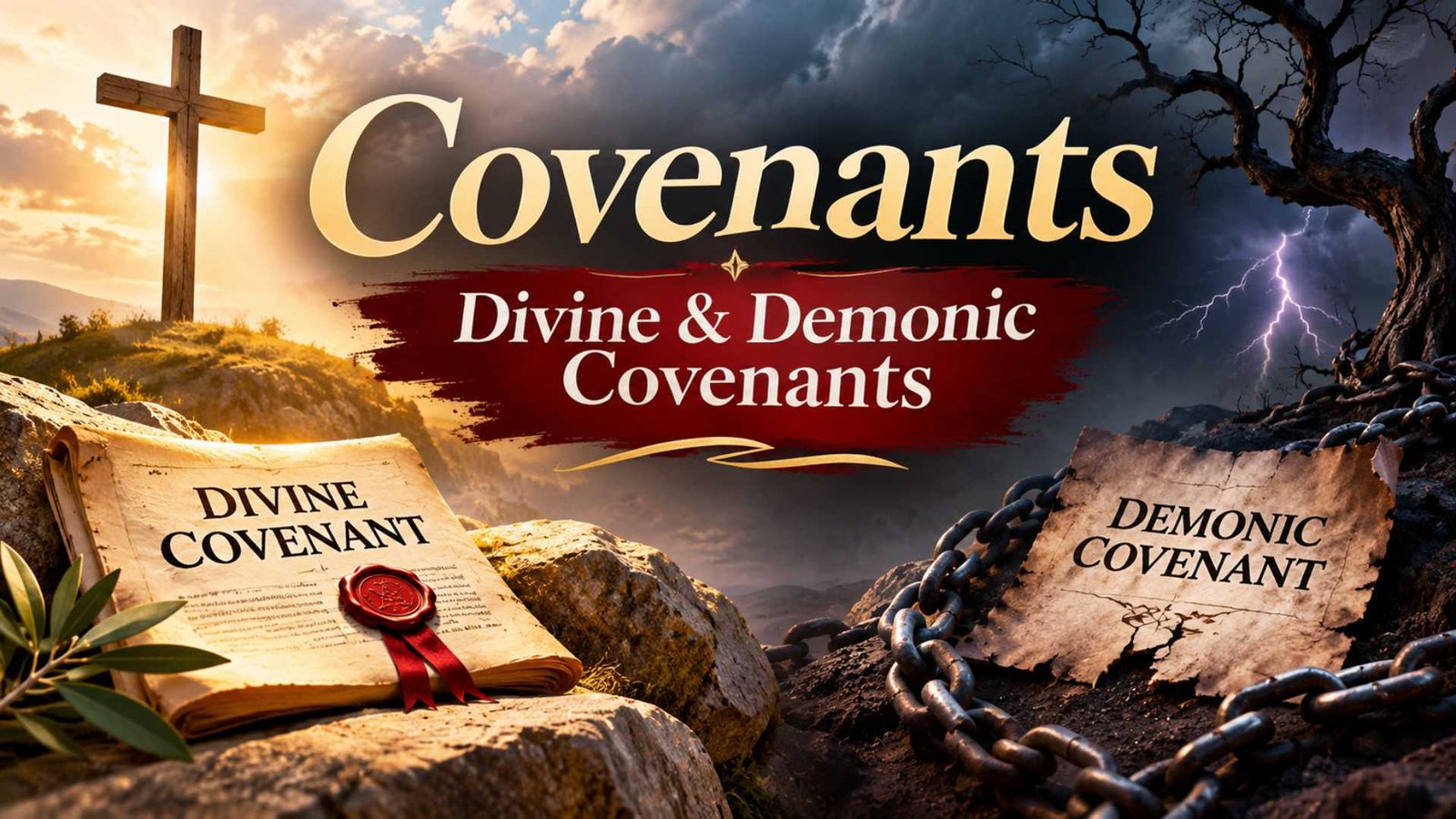
COVENANTS: Divine and Demonic Covenants – Understanding the Spiritual Power of Allegiance
Key Scriptures
- Genesis 17:1-8
- Deuteronomy 7:6-9
- 1 Corinthians 10:20-21
- Colossians 2:13-15
- Hebrews 8:6-13
Introduction
One of the most profound subjects in Scripture is the subject of covenants. From Genesis to Revelation, we discover that covenants are central to understanding God’s relationship with humanity, spiritual allegiance, worship, promises and obligations.
A covenant is more than an ordinary agreement. It establishes a binding relationship between parties, often involving promises, commitments, responsibilities and, in biblical contexts, sometimes blood.
But there is another dimension worth examining: while Scripture reveals God’s divine covenants with humanity, it also warns against spiritual allegiances, idolatrous worship and practices that bring people into fellowship with demonic powers.
This raises important questions: What distinguishes a divine covenant from a demonic covenant? Can human beings enter into spiritual agreements outside God’s will? Can someone knowingly dedicate themselves to another spiritual power? And what does the victory of Jesus Christ mean for those who have participated in such practices?
To understand these questions, we must examine what Scripture actually teaches.
1. Understanding the Nature of a Covenant
A covenant is a solemn and binding arrangement that establishes a relationship between parties. Unlike an ordinary agreement, biblical covenants often carry profound spiritual significance.
Throughout Scripture, God initiates covenants to reveal His purposes and establish His relationship with humanity.
Consider God’s covenant with Noah in Genesis 9:8-17, His covenant with Abraham in Genesis 17:1-8, and His covenant with David in 2 Samuel 7:12-16.
These covenants reveal something important: God is intentional about His relationships and faithful to His promises.
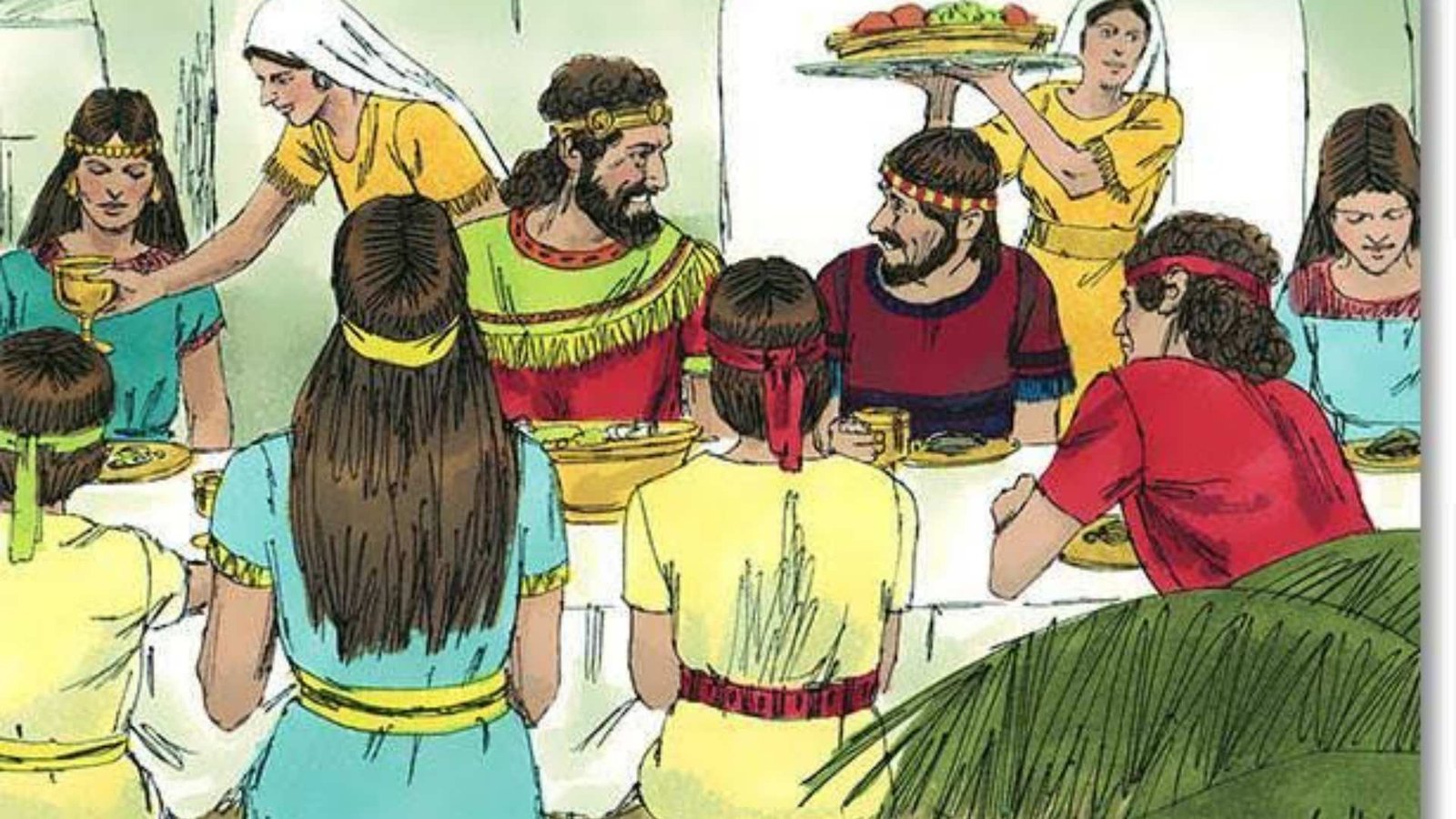
Covenants can also exist between human beings. Abraham made an agreement with Abimelech (Genesis 21:27), while Jonathan and David established a covenant of friendship (1 Samuel 18:3).
Therefore, covenant is not exclusively a divine arrangement. Human beings can enter into binding commitments with one another, although they cannot independently establish a divine covenant on God’s behalf.
2. Divine Covenants: When God Establishes a Relationship
Divine covenants are covenants established by God according to His will and purpose.
One of the most significant examples is God’s covenant with Abraham.
In Genesis 17:7, God declares that He will establish His covenant with Abraham and his descendants throughout their generations.
This covenant involved promises concerning descendants, relationship with God and inheritance.
However, Abraham’s covenant was not simply about receiving blessings. God also called him to walk before Him and be blameless (Genesis 17:1).
We see another expression of divine covenant in the New Testament through Jesus Christ.
During the Last Supper, Jesus declared:
“This cup is the new testament in my blood, which is shed for you.” (Luke 22:20, KJV).
The New Covenant is established through the sacrificial death of Jesus Christ. It brings forgiveness of sins and a restored relationship with God through faith in Christ.
The greatest expression of divine covenant is not material possession but reconciliation with God through Jesus Christ.
3. Demonic Covenants: Understanding Spiritual Allegiance Outside God
The expression “demonic covenant” is commonly used in Christian discussions to describe an intentional spiritual agreement, dedication or allegiance involving demonic powers.
Although the Bible does not present a formal theological category called “demonic covenants” in the same structured way it presents God’s covenants, it clearly warns against spiritual relationships and practices involving other gods and demonic powers.
Consider Deuteronomy 18:9-14. God warned Israel against divination, sorcery, witchcraft, consulting spirits and other occult practices.
Why was this important?
Israel had been called into a covenant relationship with the living God. Participating in the religious and occult practices of surrounding nations represented a departure from that allegiance.
Paul makes this distinction particularly clear in 1 Corinthians 10:20-21.
He explains that sacrifices offered to idols involve fellowship with demons and warns believers against participating in both the Lord’s table and the table of demons.
This reveals an important spiritual principle: worship is not merely an outward religious activity; it involves allegiance.
A person cannot claim wholehearted devotion to God while deliberately participating in spiritual practices that oppose Him.
4. How Do People Enter Into Ungodly Spiritual Allegiances?
Scripture identifies several ways people can become involved in practices that compromise their allegiance to God.
Idolatrous worship: Israel repeatedly turned away from God to worship other gods. The golden calf incident in Exodus 32 demonstrates how quickly a covenant people could turn toward idolatry.
Occult practices: Deuteronomy 18:10-12 explicitly prohibits divination, sorcery, witchcraft and consulting the dead.
Participation in demonic worship: First Corinthians 10:20-21 warns against fellowship with demonic powers through idolatrous sacrifices.
Deliberate spiritual dedication: When someone knowingly dedicates themselves to a spiritual power contrary to God, that commitment represents a serious departure from biblical faithfulness.
It is important, however, not to assume that every family difficulty, recurring misfortune, financial struggle or unexplained hardship is evidence of a demonic covenant.
Scripture calls believers to spiritual discernment, not speculation and fear.
5. Can Family Covenants Affect Generations?
One of the most frequently discussed subjects in spiritual warfare is the possibility of generational spiritual consequences.
In Exodus 20:5-6, God speaks about the consequences of iniquity affecting generations, while also declaring His mercy toward those who love Him and keep His commandments.
We also see Israel repeatedly experiencing the consequences of previous generations’ disobedience.
However, Ezekiel 18:20 establishes an important principle of personal accountability: the son does not bear the guilt of the father’s sin.
This distinction matters.
Children can suffer the consequences of decisions made by previous generations. They may inherit harmful practices, destructive family patterns, unhealthy beliefs and environments shaped by earlier choices.
But Scripture does not teach that every descendant is automatically spiritually bound by a hidden demonic contract simply because of their family history.
In Christ, believers are called to a new identity and a new life.
Galatians 3:13 declares that Christ redeemed us from the curse of the law by becoming a curse for us.
The believer’s hope is not in discovering endless hidden covenants but in understanding and standing in the finished work of Jesus Christ.
6. Jesus Christ: The Authority Above Every Other Power
Perhaps the most important part of this discussion is understanding the authority of Jesus Christ.
Colossians 2:13-15 explains that through His death, Christ cancelled the record of debt that stood against us and disarmed rulers and authorities, triumphing over them.
This is a powerful declaration of Christ’s victory.
The cross was not merely an expression of love; it was also the decisive victory over sin and the powers of darkness.
A person who has participated in occult practices, idolatry or ungodly spiritual commitments does not need to live permanently under condemnation or fear.
The biblical response is repentance, renunciation of ungodly practices, faith in Christ and a commitment to follow Him.
Acts 19:18-20 provides a practical example. In Ephesus, people who had practised sorcery publicly confessed their involvement and destroyed their books of magic.
Notice what happened: they did not simply make declarations. They demonstrated repentance through a decisive change of direction.
What darkness once represented in a person’s life does not have to determine their future in Christ.
7. Can a Believer Establish a Personal Covenant with God?
This brings us to an important question.
Can someone approach God and make a commitment such as:
“Lord, if You establish my business and grant me financial increase, I will dedicate part of my resources to funding Your kingdom projects”?
The Bible gives us examples of people making solemn vows before God.
In Genesis 28:20-22, Jacob made a vow concerning God’s protection, provision and his commitment to honour God.
In 1 Samuel 1:11, Hannah made a vow concerning the dedication of the son she was asking God to give her.
These examples demonstrate that people can make personal vows and commitments before God.
However, we must distinguish personal vows from covenants established by God.
A personal vow does not give someone the authority to negotiate God’s promises or guarantee a particular outcome.
Under the New Covenant, believers are encouraged to live faithfully, give willingly and steward their resources responsibly.
Second Corinthians 9:7 teaches that giving should be intentional and cheerful, not reluctant or compelled.
Therefore, a church harvest can become an occasion for renewed dedication, sacrificial giving and commitment to kingdom advancement without turning the offering into a transaction to purchase divine favour.
8. The Chosen and the Covenant: Understanding Your Spiritual Allegiance
One of the profound truths in Scripture is that God calls people into a relationship with Himself.
First Peter 2:9 describes believers as a chosen generation, a royal priesthood, a holy nation and a peculiar people.
This identity carries responsibility.
Being chosen does not mean a person is exempt from obedience, accountability or spiritual discipline.
Israel was chosen, yet repeatedly faced the consequences of disobedience.
Similarly, believers are called to remain faithful to Christ.
The question is not simply whether someone has been chosen, but whether their lives reflect the One who called them.
A believer’s allegiance must remain with Christ.
This means rejecting idolatry, refusing occult practices, pursuing holiness, practising love and faithfully managing whatever God entrusts to them.
Divine election introduces us to God’s purpose; faithful obedience shapes how we walk in that purpose.
Conclusion: Choose Whose Covenant Defines Your Life
Covenants reveal the seriousness of spiritual relationships and allegiance.
Throughout Scripture, God demonstrates His faithfulness through His covenants, ultimately establishing the New Covenant through the blood of Jesus Christ.
At the same time, Scripture warns against idolatry, occult practices and participation in spiritual activities that oppose God.
The believer must therefore understand that spiritual allegiance is not a casual matter.
We cannot serve two masters (Matthew 6:24).
But this message should not produce fear. The Gospel announces the victory of Jesus Christ over sin and the powers of darkness.
If you have participated in ungodly spiritual practices, there is a way back through repentance and faith in Christ.
You do not need to remain bound to your past.
Your identity, hope and spiritual future must be established in Jesus Christ.
A covenant with God is not an arrangement for purchasing blessings; it is a relationship of grace that calls for faith, love, obedience and faithful stewardship.
A Prayer
Heavenly Father,
Thank You for Your faithfulness and for the New Covenant established through the blood of Jesus Christ.
Give me understanding of Your Word and wisdom to recognise every practice that contradicts my relationship with You.
Where I have participated in anything contrary to Your will, grant me genuine repentance and the strength to turn away from it.
Let my life, decisions, resources and commitments reflect my allegiance to Jesus Christ.
Establish my heart in Your truth, strengthen my faith and help me fulfil the purpose for which You have called me.
In Jesus’ name, Amen.
Scriptures for Further Study
- Genesis 17:1-14
- Exodus 20:1-6
- Deuteronomy 18:9-14
- 2 Chronicles 15:12-15
- 1 Corinthians 10:14-22
- Acts 19:18-20
- Galatians 3:13-14
- Colossians 2:13-15
- Hebrews 8:6-13
- 1 Peter 2:9-10