
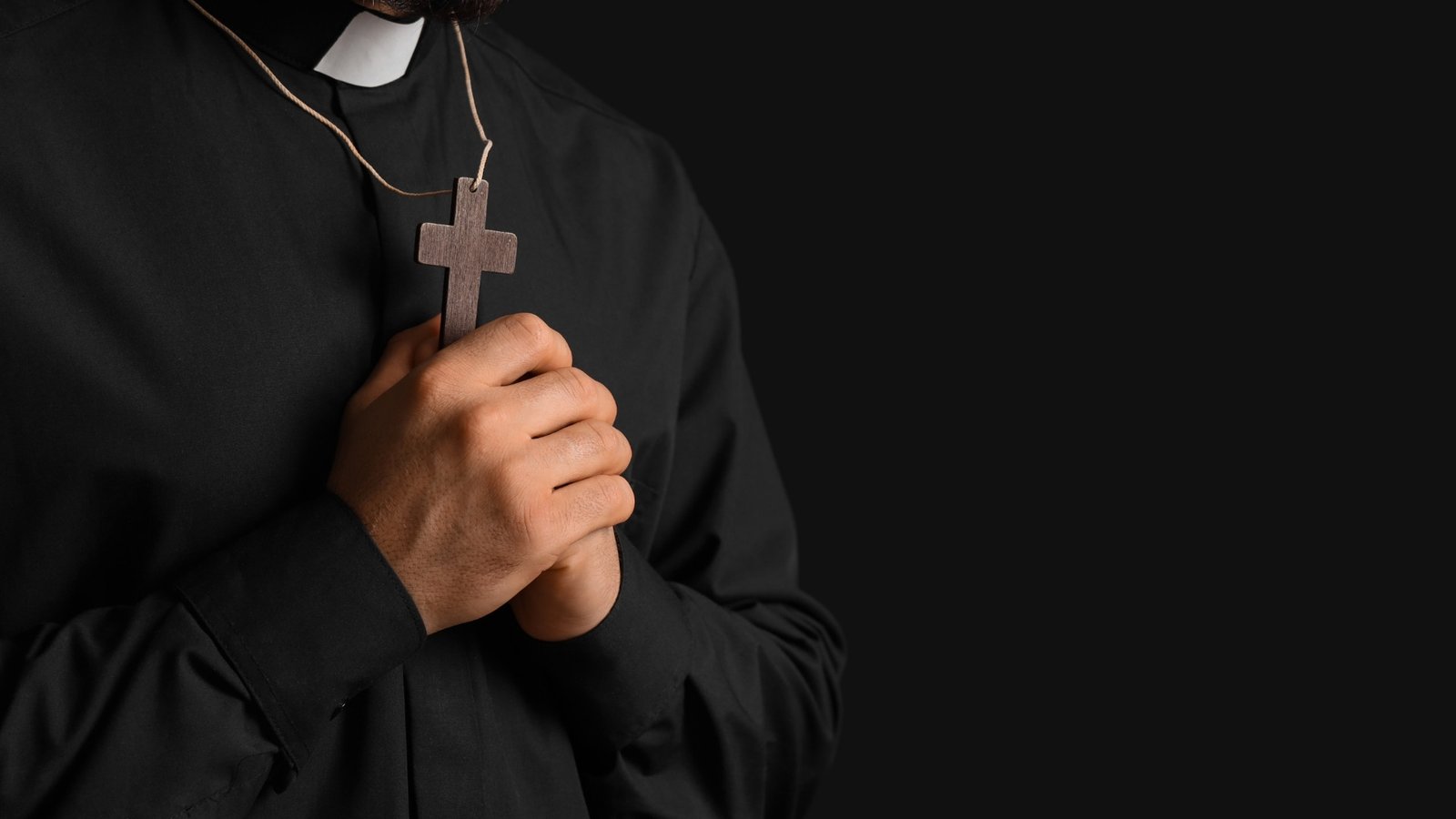
The Burden of Priesthood
The Weight of Standing Before God and Carrying the Needs of Men
There is a dimension of spiritual responsibility that goes beyond the privilege of being called by God. It is the burden of priesthood—the weight of standing before God on behalf of people, carrying their needs in prayer, preserving the knowledge of His ways, and accepting the responsibility that comes with spiritual access.
Priesthood is a privilege, but it is also a responsibility. It grants access to the presence of God, yet it demands reverence. It carries the honour of representing God, yet it requires a life of consecration. It allows a person to intercede for others, yet it also calls that person to maintain a faithful relationship with the One before whom they stand.
In Exodus 28:29, God instructed Moses concerning Aaron, the high priest:
“And Aaron shall bear the names of the children of Israel in the breastplate of judgment upon his heart, when he goeth in unto the holy place, for a memorial before the LORD continually.”
This instruction reveals something profound about the nature of priesthood. Aaron did not enter God’s presence merely as an individual seeking his own blessing. He carried the names of the people upon his heart.
The priest entered the presence of God carrying people who were not physically standing there with him.
That is one of the deepest expressions of priesthood. It is the ability to stand before God with a consciousness of responsibilities beyond oneself.
The Burden of Carrying People Before God
The priesthood of the Old Testament was built around representation. The priest stood between the holy presence of God and the people who needed atonement, instruction, and spiritual direction. Under the covenant established through Moses, the high priest carried the names of Israel before the Lord and performed duties prescribed by God.
The breastplate of the high priest was not merely ceremonial clothing. It represented the people he served. Their names were placed over his heart.
This teaches us that priesthood is not simply about standing on a platform, wearing a clerical garment, or occupying a spiritual office. At its heart, priesthood involves a responsibility to God and a burden for people.
A person who carries priestly responsibility cannot afford to be consumed entirely by personal ambition. There must be room in the heart for the needs of others, the spiritual condition of a family, the welfare of a congregation, and the purposes of God in a community.
Consider Moses. When Israel sinned by worshipping the golden calf, Moses returned to the presence of God with a burden for the people. In Exodus 32:31–32, he acknowledged their sin and pleaded with God concerning their future.
Moses did not treat the failure of the people as an opportunity to distance himself from them. He interceded for them.
This does not mean that spiritual leaders must excuse wrongdoing or accept responsibility for every decision other people make. Rather, it shows that genuine spiritual responsibility involves seeking God’s mercy, wisdom, correction, and restoration for those entrusted to one’s care.
Priesthood teaches the heart to carry people in prayer without pretending to be their saviour.
That distinction matters. No pastor, intercessor, parent, or spiritual leader can replace Christ. We can pray, counsel, teach, correct, and support others, but we must remember that their ultimate hope is in God.
The Burden of Consecration
Before a priest could faithfully minister in the holy place, there were instructions concerning consecration.
Exodus 29 describes the process through which Aaron and his sons were set apart for their priestly service. Their preparation was deliberate because their assignment was sacred.
Priesthood required more than a title. It required readiness to serve according to God’s instructions.
Leviticus 10 gives us a sobering account of Nadab and Abihu, the sons of Aaron, who offered unauthorised fire before the Lord. Their story demonstrates the seriousness with which the biblical text treats the holiness of God’s presence and the responsibility of those who minister before Him.
Spiritual privilege does not eliminate spiritual accountability.
The closer a person comes to responsibility, the more seriously that person must consider character, obedience, and reverence. A gift may attract people, but character helps sustain faithful service. Anointing is not a licence for carelessness, and public recognition is not proof of private faithfulness.
In the New Testament, believers are called to present their bodies as living sacrifices, holy and acceptable to God (Romans 12:1). Although the priesthood of all believers is fulfilled through Christ and does not reproduce every requirement of Israel’s Old Testament priestly system, the principle of consecrated living remains important.
For the Christian, consecration means allowing God’s Word to shape conduct, motives, relationships, speech, and decisions.
It means asking difficult questions: Am I becoming the person my ministry requires me to be? Is my private life consistent with the truth I teach? Am I serving God out of love, or have I become dependent on the recognition that comes with spiritual responsibility?
The burden of priesthood includes the responsibility to remain teachable before God.
The Burden of Intercession
One of the most recognised expressions of priestly responsibility is intercession.
Intercession is more than mentioning people in prayer. It is the act of bringing their needs, struggles, circumstances, and spiritual condition before God in earnest petition.
In Numbers 14, after the people rebelled and refused to trust God’s promise, Moses pleaded for them. He appealed to God’s character and mercy, asking the Lord to forgive the people according to the greatness of His steadfast love.
Moses understood that leadership required more than giving instructions. There were moments when the needs of the people demanded that he stand before God in prayer.
We see a similar pattern in Samuel’s response to Israel. In 1 Samuel 12:23, he declared:
“Moreover as for me, God forbid that I should sin against the LORD in ceasing to pray for you: but I will teach you the good and the right way.”
Notice the connection Samuel makes between prayer and instruction. He would pray for the people and teach them the right way.
This is a balanced picture of spiritual responsibility. Intercession does not replace instruction, and instruction does not make prayer unnecessary. The priestly heart desires both God’s intervention and the people’s growth in truth.
Parents may carry their children in prayer. Pastors may intercede for their congregations. Christian leaders may pray for their communities and nations. Believers may pray for friends who have lost their way.
Yet intercession should not become a source of pride, fear, or the belief that everything depends on one person’s prayers. God remains sovereign, and every believer is called to trust Him.
Nor does intercession guarantee that every situation will unfold according to our preferred timetable. Some prayers are answered in ways we do not expect; some questions remain unresolved for a season. Faithfulness in prayer is not measured solely by immediate visible results.
The burden of intercession is the willingness to bring people before God even when their circumstances are beyond our ability to change.
The Burden of Standing in the Gap
Ezekiel 22:30 contains one of the most striking descriptions of spiritual responsibility:
“And I sought for a man among them, that should make up the hedge, and stand in the gap before me for the land, that I should not destroy it: but I found none.”
The image of standing in the gap communicates responsibility in a time of moral and spiritual crisis. God was confronting the corruption of Jerusalem’s leaders and the injustice that had spread through the land. The verse expresses the seriousness of a situation in which no one was found to take the necessary stand.
Standing in the gap is not simply a dramatic phrase to use during prayer meetings. In its biblical context, it speaks to the absence of someone willing to confront the conditions that had brought judgment upon the people.
Today, the principle can be applied to believers who respond to brokenness with prayer, truth, courage, and responsible action.
To stand in the gap for a family may mean praying consistently while also helping to resolve conflict. To stand in the gap for a church may mean refusing to ignore destructive behaviour and encouraging accountability. To stand in the gap for a nation may mean praying for leaders, pursuing justice, serving communities, and speaking truthfully about wrongdoing.
Prayer and action are not enemies.
Nehemiah prayed when he heard about Jerusalem’s broken walls, but he also developed a plan, approached the king, gathered resources, and organised the rebuilding work (Nehemiah 1–4).
His example reminds us that spiritual burden can lead to practical responsibility.
Sometimes the answer to a burden is not merely another prayer meeting. It may also involve a conversation, a difficult decision, a plan, a boundary, an act of service, or the courage to confront a problem wisely.
The person who stands in the gap must be willing to seek God and then respond faithfully to what is within their responsibility.
The Burden of Bearing Responsibility Without Becoming the Messiah
There is a danger in spiritual service: a person may begin with compassion and gradually assume that every problem must be solved through their personal effort.
They pray for everyone, counsel everyone, respond to every crisis, and attempt to carry every disappointment. Eventually, the very responsibility that once inspired them begins to exhaust them.
This is not the purpose of priesthood.
In Numbers 11, Moses reached a point of deep distress because of the weight of leading Israel. He expressed to God how overwhelming the responsibility had become. God responded by directing Moses to appoint elders who could share the burden of leadership with him (Numbers 11:14–17, 24–25).
The passage is important because God did not instruct Moses to prove his spirituality by carrying everything alone. He provided a structure for shared responsibility.
Earlier, in Exodus 18, Jethro had also advised Moses to appoint capable people to help judge the people’s disputes. Moses accepted the counsel, and the work became more manageable.
These accounts challenge the idea that spiritual maturity requires endless personal exhaustion.
You can be committed to prayer without neglecting sleep. You can care for people without being available at every hour. You can serve a congregation without personally solving every problem. You can carry a spiritual assignment while receiving counsel and sharing responsibilities with others.
Even Jesus, during His earthly ministry, withdrew to pray (Luke 5:16). He did not allow the constant demands of the crowds to eliminate every moment of solitude.
The burden of priesthood must be carried with wisdom.
There is a difference between sacrifice and self-destruction, between compassion and unhealthy dependence, and between faithfulness and the inability to say no.
God may entrust people to your care, but He has not made you responsible for being their God.
This truth is especially important for pastors, intercessors, ministry workers, parents, and anyone who feels responsible for the spiritual well-being of others.
You are called to serve faithfully, not to occupy the place that belongs to Christ alone.
The Burden of Teaching God’s Ways
Priesthood was not limited to sacrifices and intercession. The priests also had responsibilities connected to instruction and discernment.
Leviticus 10:10–11 connects the priestly duty to distinguish between the holy and the common, the clean and the unclean, and to teach the Israelites the statutes of the Lord.
This means that spiritual responsibility involves helping people understand God’s ways.
A priestly ministry must not merely stir emotions. It must also build understanding. It should help people discern truth, grow in holiness, exercise wisdom, and develop a faithful relationship with God.
This responsibility is particularly relevant in a time when spiritual language can be used to influence people without giving them a proper understanding of Scripture.
People need more than declarations. They need biblical instruction. They need to understand the difference between God’s promises and personal assumptions, between faith and presumption, between forgiveness and the absence of boundaries, and between spiritual warfare and problems that require practical solutions.
A faithful teacher does not manipulate people with fear or claim certainty where Scripture gives none. Instead, the teacher handles God’s Word carefully and helps others grow in spiritual maturity.
The burden of teaching is the responsibility to speak truthfully, even when truth is less popular than an appealing message.
James 3:1 warns that teachers will be judged more strictly. This should not discourage those who are called to teach, but it should remind them that spiritual influence comes with accountability.
When people trust you to explain Scripture, your words can shape their understanding of God, their decisions, and their treatment of others. Such influence must be handled with humility.
The Burden of Holiness in a Corrupt Environment
The priesthood also reminds us that a person can be called to serve God while living among people whose values do not reflect His character.
The challenge is not merely to remain separate from wrongdoing in outward appearance. It is to remain faithful in the heart.
Daniel provides a useful example of this principle, although he was not an Israelite priest. He lived in a foreign imperial environment, served within its political structures, and encountered pressure to compromise his convictions. Yet Daniel 1:8 records that he resolved not to defile himself with the royal food and wine.
His example illustrates a wider biblical principle: faithfulness to God must shape how we participate in the world.
Those who carry spiritual responsibility will encounter opportunities to compromise for convenience, influence, money, popularity, or acceptance. Sometimes the pressure will come through open opposition; at other times, it will come through small decisions that gradually reshape a person’s conscience.
The burden of holiness is the responsibility to remain faithful when compromise appears advantageous.
This does not mean withdrawing from society or treating everyone outside the church as an enemy. It means engaging the world with integrity while refusing to abandon the convictions God has established through His Word.
A spiritual leader’s influence is weakened when public ministry becomes impressive but private conduct becomes careless.
The most important question is not only whether people can recognise your gift. It is whether your life increasingly reflects the character of Christ.
Christ: The Great High Priest Who Carries Us
Every discussion of Christian priesthood must ultimately lead to Jesus Christ.
The Old Testament priesthood had a particular place within Israel’s covenant relationship with God. Its sacrifices, rituals, and offices pointed beyond themselves to the work of Christ, who fulfils the role of the perfect and enduring High Priest.
Hebrews 4:14–16 presents Jesus as the great High Priest who has passed through the heavens. Because of Him, believers are invited to approach the throne of grace with confidence, receiving mercy and finding grace for help in time of need.
Hebrews 7:25 further teaches that Christ is able to save completely those who come to God through Him, because He always lives to intercede for them.
This is the foundation of Christian priesthood: we do not carry the burden of reconciling humanity to God through our own perfection. Jesus has accomplished what no human priest could accomplish permanently.
His sacrifice is sufficient. His priesthood is unique. Our access to God rests on Him.
First Peter 2:9 describes believers as a chosen people and a royal priesthood, called to declare the praises of the One who brought them out of darkness into His wonderful light.
The New Testament therefore speaks of the priesthood of believers. Through Christ, we have access to God and are called to worship, intercede, serve, and proclaim His goodness.
But this honour must never be confused with becoming mediators who replace Christ. Our ministry flows from His finished work, not from an independent spiritual authority of our own.
We stand before God because Christ has opened the way; we serve people because His grace has called us to a life of love and witness.
This truth brings both confidence and humility. Confidence, because we do not approach God as rejected strangers. Humility, because the privilege we enjoy was made possible through Christ.
The burden of priesthood becomes lighter when we understand that we serve under the authority of the One who carries us.
The Burden and the Grace to Carry It
There is a difference between a burden that comes with responsibility and a burden that comes from trying to control everything.
A genuine spiritual assignment may require discipline, patience, sacrifice, and perseverance. It may involve praying when others have forgotten, speaking when silence would be easier, teaching when people resist correction, and remaining faithful when the results are not immediately visible.
But spiritual responsibility must be carried with the grace, wisdom, and support that God provides.
The apostle Paul described his concern for the churches in 2 Corinthians 11:28. Beyond his other hardships, he spoke of the daily pressure of his concern for all the churches. His words reveal the emotional weight that can accompany spiritual leadership.
Yet Paul did not build his ministry on the illusion that he was sufficient in himself. In 2 Corinthians 3:5, he declared that their sufficiency was from God.
That is an essential lesson for anyone who feels the burden of priesthood.
Your strength is not the foundation of the assignment. Your intelligence is not sufficient for every challenge. Your prayers do not give you control over every outcome. Your gift does not remove your need for God’s grace.
You need the Word of God to guide you, the Holy Spirit to help you, wise people to counsel you, and a healthy understanding of the limits of your responsibility.
You also need to remember that the people you serve belong to God. You may plant and water, but God gives the increase (1 Corinthians 3:6–7).
Some people will respond to your counsel; others will reject it. Some prayers will produce visible change quickly; others will require patience. Some situations may improve through your involvement, while others may remain outside your ability to resolve.
Faithfulness is not the same as control.
The burden of priesthood is to remain obedient in your responsibility while trusting God with the results.
Conclusion: The Honour and Weight of Standing Before God
The burden of priesthood is the weight of sacred responsibility. It is the burden of carrying people in prayer, living a consecrated life, teaching God’s Word faithfully, standing for truth, and serving without attempting to replace Christ.
It reminds us that spiritual access is not an invitation to pride. It is an invitation to service.
The priestly heart learns to love people without idolising them, to intercede without claiming control, to correct without becoming cruel, and to serve without destroying itself.
It learns that private devotion matters as much as public ministry, that character must accompany gifting, and that responsibility must be carried with wisdom.
Most importantly, the Christian does not carry this burden alone. Jesus Christ is our great High Priest. Through Him, we have access to the Father, and through His grace, we receive strength to serve faithfully.
If God has entrusted people, a ministry, a family, or a spiritual responsibility to your care, do not treat it casually. Carry it with prayer, truth, compassion, and reverence.
But do not carry it as though the entire world depends on your strength.
Stand before God. Pray for those entrusted to you. Teach what is true. Live what you teach. Seek help when the burden becomes too heavy. And remember that the One who called you to serve is greater than the responsibility He has placed in your hands.
The burden of priesthood is not merely the weight of carrying people before God; it is the responsibility of remaining faithful to God while serving the people He has placed within your reach.
A Prayer for the Burden of Priesthood
Father, in the name of Jesus Christ, teach me to understand the responsibility of serving You. Give me a heart that carries people in prayer without pride, a life that honours You in private and public, and the wisdom to handle every responsibility according to Your Word.
Help me to remain faithful when the work is difficult, humble when the responsibility increases, and discerning when I must act, wait, speak, or seek counsel. Keep me from spiritual pride, unhealthy exhaustion, and the temptation to take the place that belongs to Christ alone.
Strengthen me by Your grace. Teach me to serve with love, to intercede with faith, and to lead with integrity. May my life point people to Jesus Christ, our great High Priest, and may I faithfully fulfil the responsibilities You have entrusted to me.
In Jesus’ name, Amen.
Scriptures for Further Study
- Exodus 28:29 — Carrying the names of the people before God.
- Exodus 32:30–32 — Moses intercedes for Israel.
- Leviticus 10:10–11 — The priest’s responsibility to discern and teach.
- Numbers 11:14–17 — Sharing the burden of leadership.
- 1 Samuel 12:23 — The responsibility to pray and teach.
- Ezekiel 22:30 — Standing in the gap.
- Romans 12:1 — Presenting ourselves as living sacrifices.
- Hebrews 4:14–16 — Jesus, our great High Priest.
- Hebrews 7:25 — Christ’s enduring intercession.
- 1 Peter 2:9 — The royal priesthood of believers.
- 2 Corinthians 3:5 — Our sufficiency comes from God.
- 1 Corinthians 3:6–7 — God gives the increase.










