
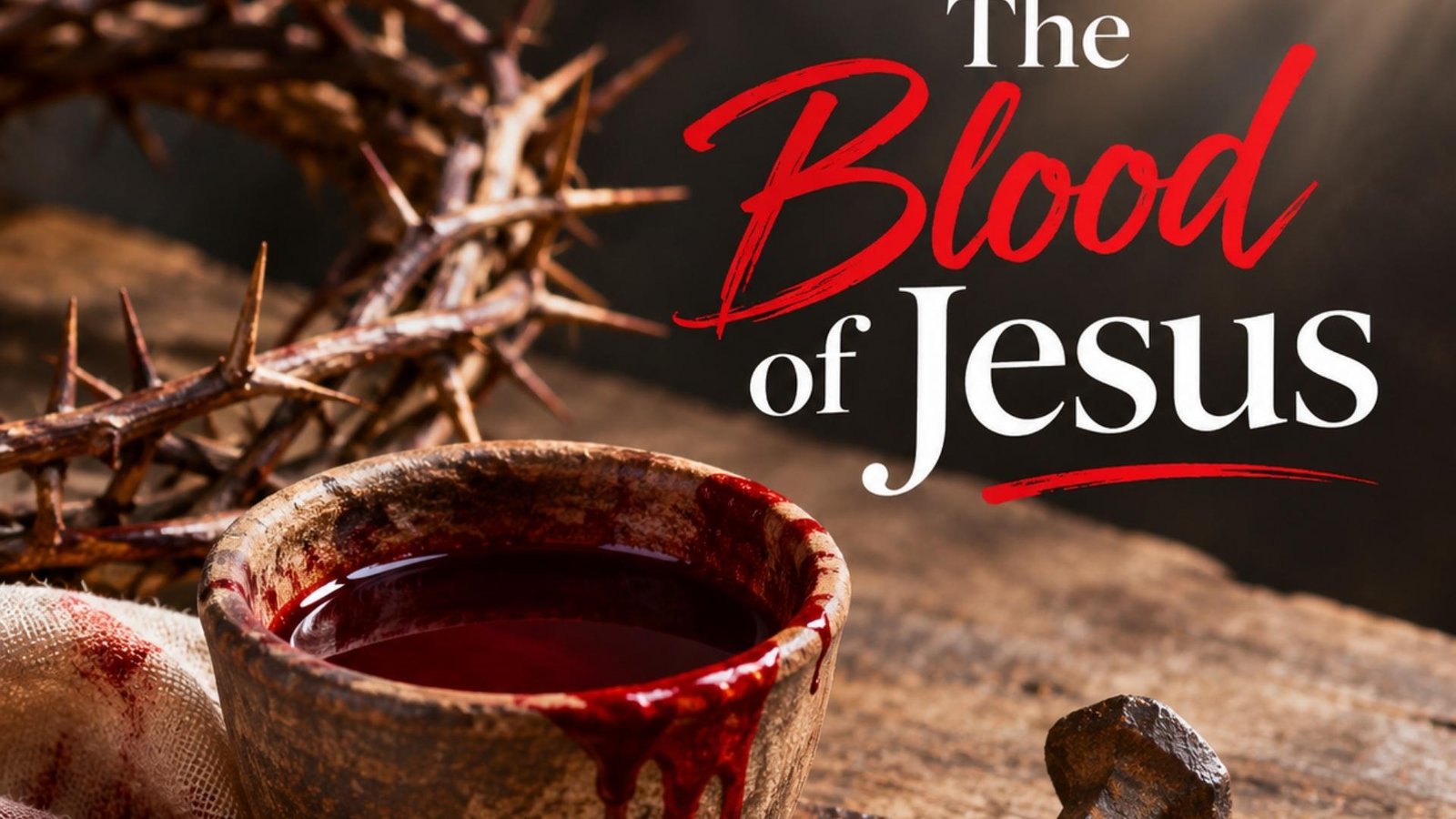
THE BLOOD OF JESUS: The Mystery, Power and Significance of the Blood of Christ
Key Scriptures
- Hebrews 9:11–14
- Leviticus 17:11
- Ephesians 1:7
- Revelation 12:11
Introduction
Throughout the Scriptures, blood carries profound significance. From the sacrifices offered in the Old Testament to the crucifixion of Jesus Christ at Calvary, blood occupies a central place in God’s dealings with humanity.
Yet, among all the blood ever shed, one stands above every other: the blood of Jesus Christ.
The blood of Jesus is not merely a symbol of suffering, sacrifice or death. It represents the fulfilment of God’s redemptive plan, the establishment of a New Covenant, the forgiveness of sins and the reconciliation of humanity to God.
When Jesus declared, “It is finished” (John 19:30), He was announcing the completion of the work He came to accomplish. His death was not an unfortunate conclusion to a promising ministry. It was the fulfilment of a divine purpose established before the foundation of the world.
But what makes His blood so significant? Why does Scripture place such emphasis on it? And what does the blood of Jesus mean for the believer today?
To understand the blood of Jesus, we must first understand the place of blood in God’s redemptive dealings with humanity.
1. The Significance of Blood in God’s Design
Leviticus 17:11 declares:
“For the life of the flesh is in the blood: and I have given it to you upon the altar to make an atonement for your souls.”
In the Old Testament, blood was associated with life. It was not treated as an ordinary substance because it represented the life of the creature.
Under the Mosaic Covenant, God established a sacrificial system through which the Israelites approached Him for atonement. Animals were offered, and their blood was presented according to the instructions God gave Moses.
These sacrifices were not arbitrary religious rituals. They communicated the seriousness of sin, the holiness of God and the necessity of atonement.
Sin had introduced separation between humanity and God. The sacrificial system demonstrated that reconciliation could not be approached casually.
However, the blood of animals was never God’s ultimate solution for sin. The sacrifices pointed towards something greater.
Hebrews 10:4 explains that it is impossible for the blood of bulls and goats to take away sins.
The Old Testament sacrifices were therefore anticipatory. They prepared the way for the perfect sacrifice of Jesus Christ.
2. The Blood of Jesus Established a New Covenant
One of the most significant moments in the ministry of Jesus occurred during the Last Supper.
In Matthew 26:28, Jesus took the cup and declared:
“For this is my blood of the new testament, which is shed for many for the remission of sins.”
Jesus was not introducing another animal sacrifice. He was announcing the establishment of a New Covenant through His own blood.
The first covenant had been inaugurated with blood when Moses sprinkled the people and declared the covenant according to God’s command (Exodus 24:6–8).
But Jesus introduced something greater.
His blood would establish a covenant not dependent upon repeated animal sacrifices but upon His once-for-all sacrifice.
Hebrews 9:15 identifies Christ as the Mediator of the New Covenant. Through His death, redemption is provided for those who receive God’s promise.
This is important because Christianity is not founded upon the repeated sacrifice of Christ. His sacrifice was sufficient.
Hebrews 10:12 says that after offering one sacrifice for sins forever, Jesus sat down at the right hand of God.
The blood of Jesus established what no human effort, religious ceremony or animal sacrifice could accomplish permanently.
The Old Covenant sacrifices pointed towards redemption; the blood of Jesus accomplished the redemption they anticipated.
3. The Blood of Jesus Provides Forgiveness and Redemption
Ephesians 1:7 declares:
“In whom we have redemption through his blood, the forgiveness of sins, according to the riches of his grace.”
Redemption means deliverance through the payment of a price.
Scripture presents humanity as being under the power and consequences of sin. Through His death, Jesus provided the means of our deliverance.
The blood of Jesus addresses the guilt of sin. It is through His sacrifice that forgiveness becomes available to humanity.
Consider the significance of this truth.
Humanity could not purchase its own redemption. Religious activities could not erase the guilt of sin. Good works could not independently establish righteousness before God.
Salvation is God’s gift of grace, received through faith in Jesus Christ (Ephesians 2:8–9).
This does not mean that good works are irrelevant. Rather, good works become the fruit of salvation, not the price paid to obtain it.
The blood of Jesus reminds us that forgiveness is not something we manufacture through personal effort. It is something God graciously provides through Christ.
No matter how deeply a person has fallen, the invitation of the Gospel remains: repent, believe and receive the forgiveness offered through Jesus Christ.
4. The Blood of Jesus Cleanses Us from Sin
One of the remarkable declarations concerning the blood of Jesus is found in 1 John 1:7:
“And the blood of Jesus Christ his Son cleanseth us from all sin.”
The passage speaks about walking in the light, having fellowship with God and experiencing the cleansing that comes through Jesus Christ.
Notice that the blood does not merely provide an external religious identity. It addresses the reality of sin.
The Christian life is not a claim that a believer has never sinned. It is a life lived in the light of God’s truth, with continual dependence upon the grace and cleansing of Christ.
This is why 1 John 1:9 immediately explains that when we confess our sins, God is faithful and just to forgive us and cleanse us from all unrighteousness.
The blood of Jesus gives the believer confidence to approach God without pretending to be perfect.
There is a difference between living in sin without repentance and stumbling while sincerely seeking to walk with God.
The Gospel does not encourage carelessness towards sin. It provides the means of forgiveness and the foundation for a transformed life.
5. The Blood of Jesus Gives Us Access to the Presence of God
Hebrews 10:19–22 presents one of the most extraordinary privileges of the New Covenant.
The writer explains that believers have confidence to enter the holiest by the blood of Jesus.
Under the Old Covenant, access to the Most Holy Place was restricted. The high priest entered once a year, and not without blood (Hebrews 9:7).
The arrangement communicated the separation between a holy God and sinful humanity.
But through Jesus, the situation changed.
When Christ died, the veil of the temple was torn from top to bottom (Matthew 27:50–51).
This event accompanied His death and carried profound significance. The way into God’s presence was opened through the sacrifice of Christ.
Believers are therefore invited to draw near to God with a sincere heart and full assurance of faith.
This is one of the greatest privileges of Christianity.
We do not approach God through the blood of animals, the mediation of an earthly high priest or our personal achievements.
We approach Him through Jesus Christ, our great High Priest (Hebrews 4:14–16).
The blood that was shed at Calvary opened the way for humanity to draw near to God.
6. The Blood of Jesus Speaks Better Things
Hebrews 12:24 describes Jesus as the Mediator of the New Covenant and His sprinkled blood as speaking better things than that of Abel.
This reference takes us back to Genesis 4.
After Cain murdered his brother Abel, God told him that Abel’s blood was crying out from the ground (Genesis 4:10).
Abel’s blood testified to an injustice that demanded divine attention.
But the blood of Jesus speaks a better word.
While Abel’s blood testified to murder and injustice, the blood of Jesus testifies to the sacrifice through which forgiveness and reconciliation are made available.
This does not mean that the injustice of humanity is ignored. Rather, Christ’s sacrifice provides the foundation upon which God offers mercy without compromising His righteousness.
At Calvary, justice and mercy meet in the redemptive work of Jesus Christ.
The cross demonstrates both the seriousness of sin and the extraordinary extent of God’s love.
Romans 5:8 reminds us that God demonstrated His love towards us in that while we were still sinners, Christ died for us.
The blood of Jesus is therefore a testimony of divine love expressed through sacrificial redemption.
7. The Blood of Jesus and the Victory of the Believer
Revelation 12:11 declares:
“And they overcame him by the blood of the Lamb, and by the word of their testimony; and they loved not their lives unto the death.”
The blood of the Lamb is central to the victory described in this passage.
The book of Revelation presents the conflict between the kingdom of God and the forces of evil. Within this picture, the victory of God’s people is rooted in the finished work of Christ and their faithful witness.
The blood of Jesus is not a magical formula or a religious phrase that guarantees a trouble-free life.
Rather, it points to the decisive victory of Christ over sin and death.
Through His death and resurrection, Jesus defeated the power of death and disarmed the spiritual powers opposed to God’s purposes (Colossians 2:13–15; Hebrews 2:14–15).
Believers share in this victory through faith in Christ.
This victory does not mean Christians will never experience persecution, temptation, suffering or opposition. The New Testament openly acknowledges these realities.
However, none of these circumstances can overturn what Christ has accomplished.
Our confidence is not in our ability to control every situation. Our confidence is in the finished work of Jesus.
8. The Blood of Jesus Demands a Response
It is possible to celebrate the blood of Jesus in songs, sermons and religious expressions while failing to appreciate what His sacrifice demands of us.
Hebrews 9:14 explains that the blood of Christ cleanses our conscience from dead works to serve the living God.
Notice the connection: cleansing and service.
The blood of Jesus does not simply rescue us from the consequences of sin; it brings us into a new relationship with God and a new way of living.
We are called to present our bodies as living sacrifices, holy and acceptable to God (Romans 12:1).
Our response should therefore include faith, repentance, obedience, holiness and love.
A person who understands the sacrifice of Christ should not treat sin casually.
A leader who understands the blood of Jesus should lead with humility and integrity.
A businessperson who understands the sacrifice of Christ should conduct business with honesty and justice.
A believer who understands the price of redemption should recognise that life is no longer centred upon self.
The blood of Jesus purchased our redemption, and our lives should reflect the One who redeemed us.
Conclusion: The Blood That Changed Everything
From the sacrifices of the Old Testament to the cross of Calvary, the Scriptures reveal a consistent movement towards God’s ultimate provision for humanity.
The blood of animals could not permanently remove sin. The religious observances of humanity could not purchase redemption. Human righteousness could not independently restore the broken relationship between God and mankind.
But Jesus came.
He lived without sin, offered Himself as the perfect sacrifice and shed His blood for the redemption of humanity.
Through His blood, forgiveness is available. Through His blood, the New Covenant was established. Through His blood, believers have access to the Father. Through His sacrifice and resurrection, the power of sin and death has been decisively confronted.
The Christian faith is not built upon the blood of an ordinary man. It is built upon the sacrificial death and victorious resurrection of the Son of God.
And this is the extraordinary message of the Gospel:
The blood of Jesus did not merely cover a religious obligation; through His sacrifice, God accomplished the redemption that humanity could never accomplish for itself.
The cross remains the centre of our faith, not because suffering is glorious in itself, but because of the One who suffered, the purpose for which He died and the victory He secured through His resurrection.
The blood was shed. The sacrifice was offered. The price of redemption was paid.
And Jesus Christ is risen!
A Prayer
Heavenly Father,
Thank You for the sacrifice of Your Son, Jesus Christ. Thank You for the blood He shed for the forgiveness of our sins and for the redemption You have made available through Him.
Help us never to take His sacrifice for granted. Give us hearts that understand the seriousness of sin, appreciate the depth of Your grace and desire to walk in obedience to Your Word.
May our lives reflect the new covenant we have received through Christ. Teach us to live in faith, holiness, humility and love.
Thank You for the access we now have to Your presence through Jesus Christ.
In Jesus’ mighty name, Amen.
Scriptures for Further Study
- Genesis 4:1–12
- Exodus 12:1–28
- Leviticus 17:10–14
- Matthew 26:26–29
- Romans 3:21–26
- Romans 5:6–11
- Ephesians 1:3–14
- Colossians 1:13–20
- Hebrews 9:11–28
- Hebrews 10:1–22
- 1 Peter 1:17–21
- Revelation 12:10–11










