
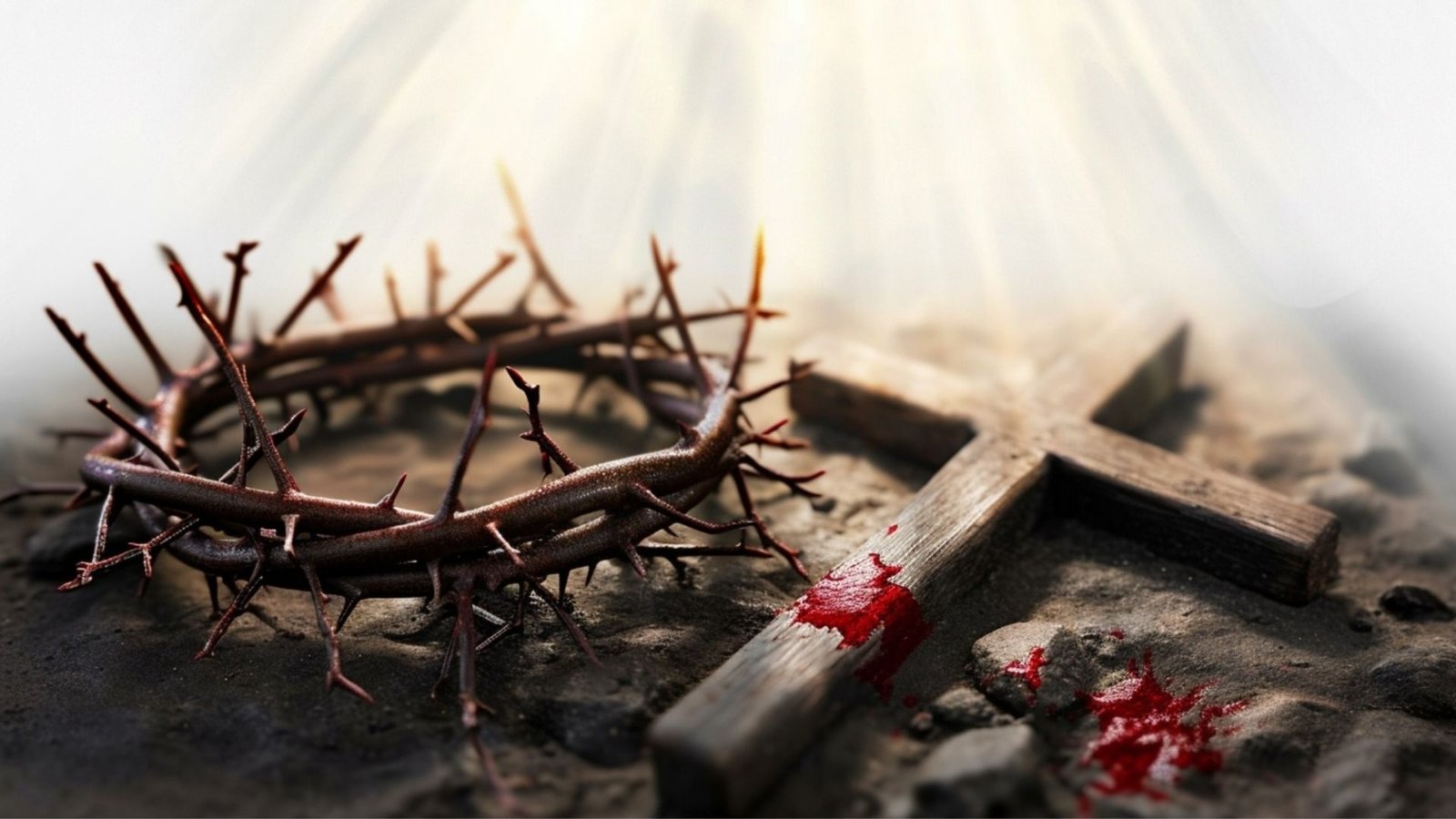
At the Name of Jesus, Every Knee Shall Bow: The Supremacy, Authority, and Lordship of Christ
Key Scriptures
- Philippians 2:9–11
- Isaiah 45:22–23
- Ephesians 1:19–23
- Colossians 2:13–15
Introduction: The Name Above Every Name
There are names that command respect, names that open doors, names that carry political influence, and names that represent authority in the systems of this world. Yet Scripture reveals a name whose authority transcends earthly governments, human institutions, spiritual hierarchies, and the boundaries of time itself: the name of Jesus Christ.
The apostle Paul declares:
“Wherefore God also hath highly exalted him, and given him a name which is above every name: That at the name of Jesus every knee should bow, of things in heaven, and things in earth, and things under the earth; And that every tongue should confess that Jesus Christ is Lord, to the glory of God the Father.” — Philippians 2:9–11 (KJV)
This passage reveals more than a powerful phrase for prayer. It unveils the supremacy of Jesus, the vindication of His suffering, the authority of His lordship, and the ultimate destiny of all creation to acknowledge who He is.
The name of Jesus is not a magical formula, nor is it merely a religious expression to be repeated whenever believers face difficulty. Its significance rests in the person who bears the name: the crucified, risen, and exalted Lord.
To understand what it means for every knee to bow, we must look beyond the sound of the name and examine the authority, victory, and divine purpose revealed through Jesus Christ.
1. The Mystery of His Exaltation: From the Cross to the Throne
Philippians 2:5–11 presents one of the most profound descriptions of the humility and exaltation of Jesus in the New Testament.
Paul begins by calling believers to possess the same mindset demonstrated by Christ. Though existing in the form of God, Jesus humbled Himself, took the form of a servant, and became obedient to the point of death—even death on a cross.
The passage then introduces a decisive transition: “Wherefore God also hath highly exalted him.”
The exaltation of Jesus is connected to His humiliation and obedience. The One who willingly descended into the condition of a servant was exalted by the Father and publicly declared Lord.
This creates a remarkable contrast. The world used the cross as an instrument of shame, punishment, and apparent defeat. Yet the Christian Gospel proclaims that the crucified Jesus rose from the dead and was exalted by God.
What appeared to be the triumph of His enemies became central to God’s redemptive work.
The cross was not evidence that Jesus had lost His authority. His willing obedience unto death was integral to His mission, and His resurrection vindicated Him as the victorious Lord.
The road to Christ’s exaltation passed through humility, obedience, suffering, and the cross. What appeared to be humiliation did not have the final word.
This truth has implications for Christian character. Although believers should not assume that every experience of suffering will lead to earthly promotion, Christ’s example teaches that obedience to God is more important than the pursuit of recognition. God’s approval cannot be measured by immediate public applause.
2. A Name Above Every Name: The Authority of Jesus Christ
Paul declares that God gave Jesus “a name which is above every name.”
In biblical thought, a name can identify a person and represent that person’s character, reputation, authority, or standing. Here, the statement is inseparable from the exaltation of Jesus and the universal confession that He is Lord.
The passage does not invite us to treat the word Jesus as a sequence of sounds that automatically produces supernatural results. Rather, it directs our attention to the authority of Jesus Himself.
His authority is not borrowed from earthly rulers. It is not dependent on political endorsement, human popularity, or the approval of religious institutions.
Matthew 28:18 records Jesus declaring after His resurrection, “All power is given unto me in heaven and in earth” (KJV). He then commissions His disciples to make disciples of all nations.
The authority of the risen Christ therefore forms the foundation of the Church’s mission.
When Christians pray in Jesus’ name, they are not simply attaching a religious phrase to their requests. They are approaching God through Christ, acknowledging His authority, and seeking to act in accordance with His will.
John 14:13–14 connects asking in Jesus’ name with the glorification of the Father through the Son. This is not a promise that every desire will be fulfilled merely by adding His name to the end of a prayer. The name represents the person, mission, and authority of Christ.
The power of the name cannot be separated from the lordship of the One whose name it is.
3. Every Knee Shall Bow: The Universal Acknowledgment of His Lordship
The expression “every knee shall bow” draws upon Isaiah 45:22–23, where the Lord declares that every knee will bow and every tongue will swear allegiance to Him.
In its original context, Isaiah 45 proclaims the uniqueness of the God of Israel and calls the ends of the earth to turn to Him for salvation. Philippians applies this language to Jesus Christ, presenting His universal lordship in language rooted in the Old Testament’s declaration of God’s sovereignty.
This is a profound theological statement.
The One who was rejected, mocked, and crucified is the One whom all creation will ultimately acknowledge. His lordship will not remain a matter of human opinion, religious preference, or political debate.
Paul describes three realms: things in heaven, things on earth, and things under the earth. The language communicates the comprehensive scope of Christ’s supremacy.
No earthly authority can place itself permanently above Him. No spiritual power can overturn God’s ultimate purpose. No human achievement can make Christ irrelevant, and no human rejection can erase His lordship.
However, the passage does not mean that every person will necessarily confess Christ willingly in the present age, nor does it by itself settle every question concerning the final destiny of humanity. Its central emphasis is the universal acknowledgment of Jesus’ lordship.
There is a difference between acknowledging Christ now in faith and obedience and acknowledging His authority when His supremacy can no longer be disputed.
The Gospel invites people to repent, believe, and follow Him now. The future universal confession of His lordship is not a substitute for present faith.
The question is not whether Jesus will ultimately be acknowledged as Lord, but whether we will willingly honour His lordship in the lives we are living today.
4. The Name of Jesus and the Defeat of Spiritual Powers
Colossians 2:13–15 describes Christ’s work in dealing with sin and disarming spiritual rulers and authorities.
Paul explains that God made believers alive with Christ, forgave their trespasses, and dealt with the record of debt that stood against them. He then describes the public disarming of rulers and authorities through Christ’s triumph.
This passage connects the victory of Christ with the forgiveness secured through His redemptive work.
The foundation of Christian spiritual confidence is therefore not fear of the devil or fascination with spiritual opposition. It is the finished work of Jesus Christ.
The New Testament recognises spiritual opposition. Ephesians 6:10–18 instructs believers to stand in God’s strength and put on the whole armour of God. Yet Christian spiritual warfare is not presented as an independent power struggle in which believers must discover secret words or rituals to make Jesus victorious.
Christ’s victory is foundational; believers are called to stand in faith, truth, righteousness, prayer, and the Gospel.
This also calls for discernment. Not every disappointment, conflict, sickness, business failure, or difficult relationship should automatically be attributed to a demonic cause. Scripture teaches believers to recognise spiritual opposition without abandoning wisdom, practical responsibility, or careful judgment.
When Christians invoke the name of Jesus, their confidence rests in His authority and saving work—not in an attempt to manipulate unseen powers through repetition.
The name of Jesus is central to spiritual warfare because Jesus Himself is Lord, and His victory provides the foundation for the believer’s hope.
5. The Name That Brings Salvation, Healing, and Deliverance
Throughout the book of Acts, the apostles proclaim Jesus as the risen Messiah and minister in His name.
In Acts 3:1–16, Peter and John encounter a man who had been unable to walk from birth. After the man is healed, Peter makes it clear that the miracle did not occur through the apostles’ own power or holiness. He points directly to Jesus Christ.
Acts 3:16 attributes the man’s restoration to faith in the name of Jesus.
Similarly, Acts 4:10–12 declares that the man stood healed through the name of Jesus Christ of Nazareth and proclaims that salvation is found in no other name.
These accounts demonstrate that the name of Jesus is associated with the proclamation of the Gospel, the ministry of healing, and the power of God at work through the apostles.
Nevertheless, biblical miracles must not be turned into mechanical guarantees. The fact that God healed particular people through the apostles does not mean that every believer who uses the same words will receive an identical outcome.
Christian prayer remains an expression of faith and dependence on God, not a technique for controlling Him.
Believers may pray boldly for healing, deliverance, restoration, and intervention while continuing to seek appropriate medical care, practical support, and wise counsel.
The enduring foundation is that Jesus is Saviour and Lord. His authority does not depend on our ability to manufacture a particular result.
6. When the Name of Jesus Is Confessed but His Lordship Is Rejected
One of the most serious warnings in Scripture is that the outward use of Jesus’ name does not automatically demonstrate a life submitted to Him.
In Matthew 7:21–23, Jesus warns that not everyone who calls Him “Lord” will enter the kingdom of heaven, but the one who does the will of His Father. He describes people who appeal to their religious activities, yet whose lives do not reflect a genuine relationship with Him.
The passage challenges a superficial understanding of spiritual authority.
A person may preach in Jesus’ name, pray publicly in Jesus’ name, or speak frequently about spiritual power while resisting Christ’s commands in private.
The name of Jesus must not become a cover for dishonesty, exploitation, pride, or the abuse of spiritual authority.
If we confess that Jesus is Lord, His lordship must influence our conduct. It should shape how we treat our families, handle money, conduct business, exercise leadership, respond to correction, and treat people who cannot benefit us.
This does not mean Christians become perfect overnight. The Christian life includes growth, repentance, and the continuing work of God’s grace. But grace does not make obedience irrelevant.
It is inconsistent to demand that every knee bow before Jesus while refusing to let our own hearts submit to His authority.
The first place His lordship should be evident is not merely in the words we speak against our challenges, but in the lives we surrender to Him.
7. Every Knee Shall Bow: The Hope of Christ’s Final Victory
The declaration of Philippians 2:9–11 points beyond present circumstances toward the ultimate recognition of Jesus Christ as Lord.
Christian hope is not founded on the belief that believers will always defeat every opponent, avoid every hardship, or receive every earthly desire. The New Testament openly acknowledges suffering, persecution, disappointment, and death.
Yet it also declares that these realities do not overturn God’s final purpose.
First Corinthians 15:24–28 speaks of Christ’s reign and the ultimate defeat of death. Revelation 11:15 announces the kingdom of the world becoming the kingdom of our Lord and of His Christ. These passages contribute to the biblical hope that God’s purposes will prevail and that Christ’s lordship will be fully manifested.
For believers facing injustice, this is a source of hope. Evil will not possess the final word. Human rulers are accountable to God. The suffering of God’s people is not forgotten, and death itself will ultimately be defeated in the fulfilment of God’s redemptive plan.
But this hope should not produce passivity or vengeance. Christians are called to pursue justice, practise mercy, forgive where appropriate, resist evil, and remain faithful.
The certainty of Christ’s ultimate victory frees believers from the burden of pretending that they control every outcome.
We can act courageously without assuming that every battle must be won on our preferred timetable. We can remain faithful when recognition is absent. We can continue doing what is right because our allegiance is to the Lord whose kingdom will endure.
Conclusion: Bow Now in Faith, Confess Now in Truth
The declaration that every knee shall bow is one of Scripture’s most powerful affirmations of the supremacy of Jesus Christ.
It reveals the One who humbled Himself unto death, the One whom God exalted, the One whose name stands above every name, and the One whose lordship will ultimately be acknowledged throughout creation.
His name is associated with salvation because He is the Saviour. His name is associated with spiritual victory because He is the victorious Lord. His name is proclaimed in the Church because He is the risen Christ. And His lordship demands our obedience because He is not merely a source of help; He is our Master.
Yet the greatest response to this revelation is not simply to shout louder or repeat His name more frequently. It is to believe in Him, trust His finished work, follow His teaching, and live under His authority.
When challenges arise, pray in His name. When confusion comes, return to His Word. When temptation presents itself, choose obedience. When injustice confronts you, stand for what is right. When suffering comes, hold firmly to the hope of His resurrection.
And above all, remember that the authority of Jesus does not depend on whether our circumstances immediately change.
The world may question His authority today, but no earthly power can cancel His lordship. The cross did not silence Him, the grave could not hold Him, and the passage of time will not diminish His reign.
One day, every knee shall bow and every tongue shall confess that Jesus Christ is Lord, to the glory of God the Father.
The wise response is to bow before Him now—not merely with our knees, but with our hearts, our decisions, our ambitions, and our lives.
Prayer
Heavenly Father, thank You for exalting Jesus Christ and giving Him the name above every name. We confess that Jesus Christ is Lord, the Saviour of the world and the One through whom we receive reconciliation with You. Strengthen our faith in times of difficulty, deliver us from fear, and teach us to stand in the victory accomplished through His death and resurrection. Let our words, decisions, relationships, and work reflect His lordship. Give us wisdom to pray according to Your will, courage to resist evil, humility to repent when we fall short, and grace to proclaim the Gospel with love and conviction. May our lives bring glory to Your name as we await the full manifestation of Christ’s kingdom. In Jesus’ mighty name, Amen.
Scriptures for Further Study
- Isaiah 45:18–25 — The sovereignty of God and universal acknowledgment
- Matthew 7:21–23 — Confession and obedience
- Matthew 28:18–20 — The authority and commission of Jesus
- Acts 3:1–16 — Healing through the name of Jesus
- Acts 4:8–12 — Salvation in the name of Jesus
- Ephesians 1:19–23 — Christ exalted above every power
- Colossians 2:13–15 — Christ’s triumph over spiritual powers
- 1 Corinthians 15:20–28 — Christ’s reign and the defeat of death
- Revelation 11:15 — The everlasting reign of God and His Christ










