
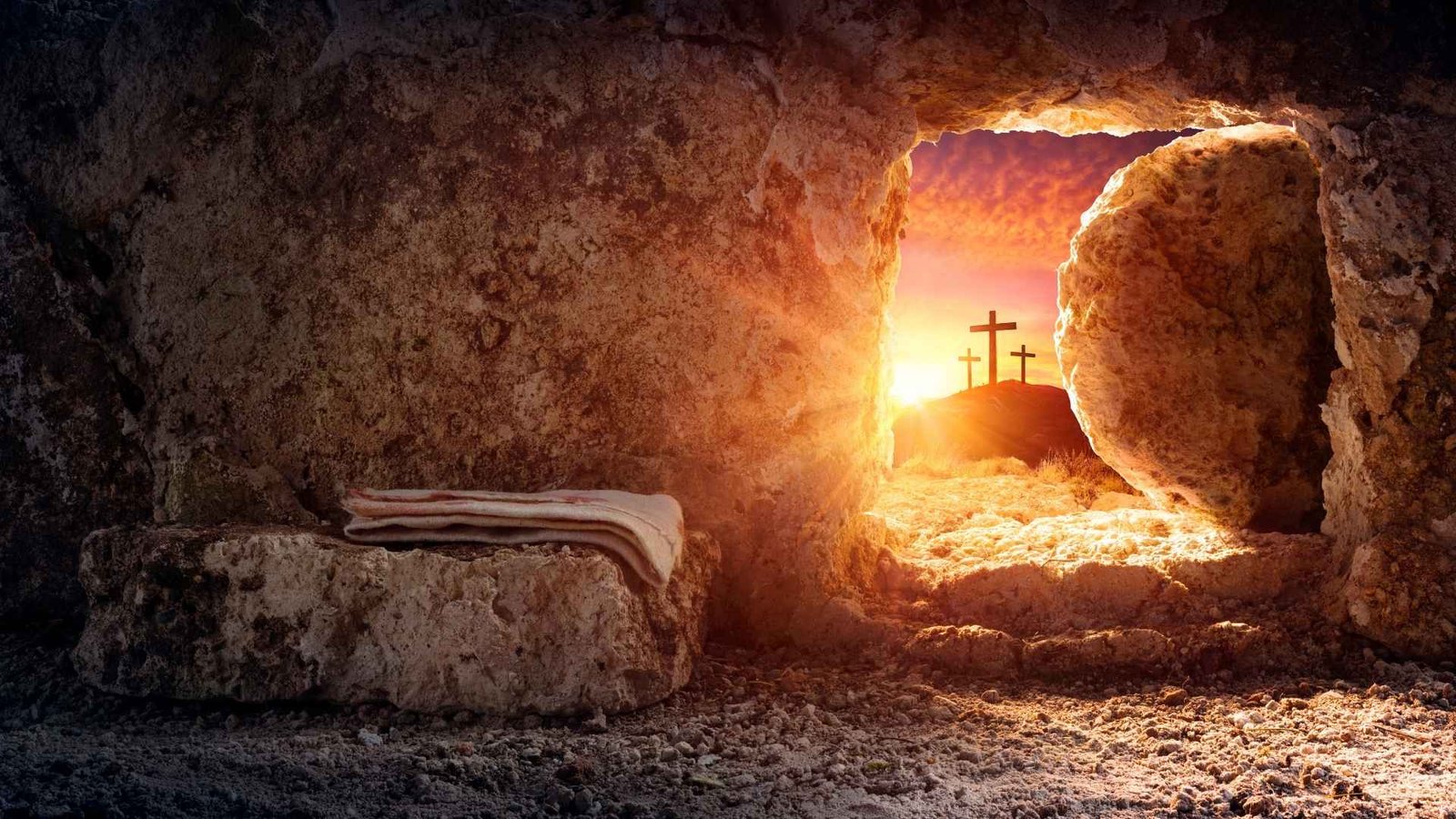
The Resurrection Power
The Power That Brings Life Out of Death
“That I may know him, and the power of his resurrection, and the fellowship of his sufferings, being made conformable unto his death.” — Philippians 3:10, KJV
There are dimensions of God’s power that become visible when everything appears to be working, and there are dimensions that are revealed when everything appears to have come to an end. There is power to begin, power to build, power to overcome opposition and power to endure. But the resurrection of Jesus Christ reveals something extraordinary: the power of God to bring life out of death and establish hope where human possibility has reached its limit.
The resurrection is not merely an event Christians celebrate at Easter. It stands at the very centre of the Christian faith. It is the declaration that Jesus Christ, who was crucified and buried, rose from the dead, and that death did not have the final word over Him.
For the believer, the resurrection is both the foundation of our hope and a revelation of the life God makes available through Christ. It speaks of victory over death, freedom from the dominion of sin, transformation by the Holy Spirit and the promise of a future in which death itself will be defeated.
Paul’s desire in Philippians 3:10 was to know Christ and the power of His resurrection. This is a remarkable statement from a man who had already encountered the risen Jesus and devoted his life to proclaiming Him. Paul understood that Christianity was not simply the acceptance of a religious message. It was an ongoing relationship with the living Christ, whose resurrection changes how believers understand suffering, obedience, purpose and eternity.
To understand resurrection power, we must first understand what the resurrection accomplished, what it means for the believer today and what it promises concerning the future.
The Resurrection: When Death Lost Its Final Word
The resurrection story begins in the shadow of the cross.
Jesus had been betrayed, condemned, beaten and crucified. His followers had witnessed the destruction of their hopes as they understood them. The One they believed to be the Messiah had died, and His body was placed in a tomb.
From the perspective of the people who watched these events unfold, the story appeared to have ended.
But on the third day, the tomb was found empty. The New Testament records that Jesus appeared to His followers and that they became witnesses to His resurrection (Matthew 28; Luke 24; John 20–21).
The apostle Paul summarizes the central importance of this event in 1 Corinthians 15:17:
“And if Christ be not raised, your faith is vain; ye are yet in your sins.”
Paul does not treat the resurrection as an optional detail of Christian belief. He presents it as essential to the gospel. If Christ had remained dead, the Christian proclamation would have lost its foundation.
But Christ has been raised.
In 1 Corinthians 15:20, Paul calls Him “the firstfruits of them that slept.” The image of firstfruits points to the beginning of a greater harvest. Jesus’ resurrection is not simply an isolated miracle; it is the beginning and guarantee of the resurrection hope promised to those who belong to Him.
This is where resurrection power begins: not with a human effort to manufacture miracles, but with what God has accomplished in Jesus Christ.
The resurrection declares that the crucifixion was not the end of Christ’s mission. It vindicates the One who was rejected, confirms the hope of the gospel and opens the way to eternal life.
The resurrection is God’s declaration that death does not possess the final authority over those who belong to Him.
This does not mean that believers will never experience physical death in the present age. Scripture teaches that Christians still face mortality, grief and suffering. The promise is that death will ultimately be defeated and that those who belong to Christ will share in the life He has secured.
The resurrection gives Christian hope a foundation beyond the circumstances of the present moment.
The Resurrection Power That Breaks the Dominion of Sin
Resurrection power is not only about what happens after physical death. The New Testament also connects Christ’s resurrection with the believer’s new life in the present.
Romans 6:4 declares that just as Christ was raised from the dead through the glory of the Father, believers should walk in newness of life.
This is a powerful spiritual truth. Through faith in Christ, the believer is not merely offered a new religious identity while remaining permanently under the dominion of the old life. The gospel calls us into transformation.
Before discussing resurrection power, we must understand the seriousness of sin. Sin is not simply a collection of mistakes. It is a power that distorts our relationship with God, damages our relationships with others and influences our desires and decisions.
A person may become accustomed to dishonesty until it feels normal. Another may remain controlled by resentment long after the original offence has occurred. Someone may repeatedly surrender to destructive desires despite knowing the damage they cause.
The gospel announces that sin does not have to remain the ruling power of a believer’s life.
Romans 6:6 teaches that our old self was crucified with Christ so that we should no longer be enslaved to sin. Paul later instructs believers not to let sin reign in their mortal bodies (Romans 6:12–14).
The resurrection life therefore involves a changed relationship with sin. We are called to reject its dominion and learn to walk in obedience to God.
This does not mean that a Christian will never struggle with temptation or that spiritual growth happens without effort. Paul himself describes the need for believers to live according to the Spirit (Romans 8:12–14). Transformation involves the work of God and our responsive obedience.
Resurrection power becomes visible when a person who once lived in deception begins to practise truth, when bitterness gives way to a genuine process of forgiveness, when selfishness is challenged by generosity, and when destructive habits are confronted through repentance, discipline and appropriate support.
The evidence of resurrection life is not merely the ability to speak about power. It is the growing reality of a life being transformed by Christ.
Resurrection power is not only God’s power to raise the dead; it is also the power of Christ’s new life at work in those who belong to Him.
The Resurrection Power That Changes Our Identity
One of the consequences of sin is the distortion of identity. People begin to define themselves by their worst failures, their painful experiences, the opinions of others or the limitations of their past.
Some live under the weight of shame. Others remain trapped in the belief that because they have failed before, they are incapable of living differently. Still others allow rejection to determine their value.
The resurrection of Jesus Christ establishes a new foundation for identity.
Second Corinthians 5:17 declares that if anyone is in Christ, there is a new creation; old things have passed away, and all things have become new.
This verse does not mean that a believer immediately forgets every painful experience or loses every unhelpful habit. It describes the reality of new life in Christ and the transformation that follows from belonging to Him.
The Christian is no longer defined ultimately by the authority of sin or by separation from God. Through Christ, there is forgiveness, reconciliation and the possibility of a new direction.
Consider Peter. He had denied Jesus three times during the events surrounding the crucifixion (Luke 22:54–62). His failure was serious, and the Gospel does not minimize it.
Yet after His resurrection, Jesus met Peter and restored him to a renewed responsibility of caring for His people (John 21:15–19).
Peter’s story does not suggest that failure is insignificant. It demonstrates that failure need not be the final chapter of a person’s life with God.
The resurrection changes how we understand the future. We can acknowledge the past without remaining permanently imprisoned by it. We can take responsibility for wrongdoing without concluding that transformation is impossible. We can receive correction and continue growing in faithfulness.
The power of resurrection does not erase the historical reality of what happened. It gives us a new foundation from which to live.
The Resurrection Power That Works in Human Weakness
Paul’s prayer in Ephesians 1:19–20 speaks of the immeasurable greatness of God’s power toward believers, according to the working of His mighty strength, which He demonstrated when He raised Christ from the dead.
Paul connects the resurrection of Jesus with the power of God at work toward His people. Yet this does not mean that every believer will experience a life free from weakness, opposition or disappointment.
The same apostle who wrote about resurrection power also described persecution, hardship, physical weakness and seasons of uncertainty.
In 2 Corinthians 12:9, Paul records the Lord’s response to his weakness: “My grace is sufficient for thee: for my strength is made perfect in weakness.”
The Christian life therefore holds together two truths that must not be separated. God possesses resurrection power, and believers may still experience genuine human limitations.
Sometimes God’s help comes through a dramatic change in circumstances. At other times, His grace sustains a person through circumstances that do not change as quickly as desired.
Sometimes we experience healing, restoration or a new opportunity. At other times, we receive strength to endure, wisdom to make a difficult decision or the courage to continue faithfully.
Resurrection power should not be reduced to a promise that every problem will disappear immediately. Its foundation is the risen Christ and the new life He gives, not our ability to control every outcome.
The resurrection assures us that suffering and death do not have the final word in God’s purposes. It also teaches us to live faithfully in the present, even when we do not yet see the full manifestation of that hope.
Lazarus: A Picture of the Power of Christ
John 11 provides one of the most memorable accounts of Jesus confronting death.
Lazarus, the brother of Mary and Martha, becomes seriously ill and dies before Jesus arrives in Bethany. By the time Jesus reaches the tomb, Lazarus has been dead for four days.
The sisters are grieving, and both express the belief that if Jesus had arrived earlier, their brother would not have died.
Jesus responds to Martha with a statement that reaches beyond the immediate situation:
“I am the resurrection, and the life: he that believeth in me, though he were dead, yet shall he live.” — John 11:25, KJV.
Notice that Jesus does not merely say that He can perform a resurrection. He identifies Himself as the resurrection and the life.
The miracle that follows, in which Lazarus comes out of the tomb, demonstrates Jesus’ authority and serves as a sign pointing to His identity (John 11:38–44).
Yet Lazarus’s restoration to mortal life should be distinguished from the resurrection of Jesus. Lazarus returned to ordinary human life and would eventually die again. Christ rose in victory over death and is presented in the New Testament as the firstfruits of the resurrection to come.
The story of Lazarus nevertheless offers an important lesson about faith. Martha believed in the future resurrection at the last day, but Jesus directed her attention to the One standing before her.
Her hope was not merely in a doctrine about an event. It was in the person of Christ.
This does not mean that every person who dies will be raised immediately in response to prayer. The account is a particular miracle in the ministry of Jesus, and we should not turn it into a formula for guaranteeing specific outcomes.
Its central message is that Jesus has authority over death and that life is found in Him.
When we face situations that appear beyond human ability, the story invites us to remember who Christ is. We may not know how He will respond to every request, but we can place our hope in His character and in the promises He has revealed.
The Resurrection Power That Restores Hope
Death is not the only experience that can make a person feel that life has ended. Disappointment can create a similar sense of finality.
A business may collapse. A relationship may break down. A long-awaited opportunity may disappear. A person may experience years of frustration and begin to believe that meaningful progress is no longer possible.
These experiences are not equivalent to physical death, and we should not use resurrection language to trivialize their seriousness. Nevertheless, the resurrection provides a foundation for hope when circumstances appear final.
The disciples themselves experienced profound disappointment after the crucifixion. Their expectations concerning Jesus and the kingdom were shaken by His death. The two disciples on the road to Emmaus spoke of their hope that Jesus would redeem Israel (Luke 24:13–21).
Their words reflected disappointment because they had not yet understood what God was accomplishing through the death and resurrection of Christ.
When the risen Jesus explained the Scriptures to them, their understanding began to change. Later, they recognized Him, and they returned to Jerusalem to share what had happened (Luke 24:25–35).
The circumstances of the crucifixion were real. The grief was real. But their understanding of the story had been incomplete.
This reminds us to be careful about declaring that a painful season has permanently defined our future.
A failed attempt does not prove that every future attempt will fail. A closed opportunity does not establish that every possible opportunity has disappeared. A season of grief does not mean that joy can never return.
We should not assume that God will restore every lost opportunity in precisely the same form. Some losses cannot be reversed, and some situations require us to grieve and move forward rather than attempt to recreate the past.
But the resurrection gives us a reason not to treat present disappointment as the ultimate definition of reality.
In Christ, hope reaches beyond what we can presently see.
Resurrection Power and the Renewal of the Mind
The new life of the believer also involves a transformed way of thinking.
Romans 12:2 instructs Christians not to be conformed to this world but to be transformed by the renewing of their minds. Although this passage does not use the phrase “resurrection power,” it describes an essential aspect of living as a person whose life has been changed by God.
Our thoughts influence how we interpret circumstances, respond to people and make decisions.
If we continually rehearse resentment, we may become increasingly hostile. If we assume that every setback proves we are incapable, we may stop taking responsible action. If we build our identity around comparison, another person’s success may become a source of constant distress.
The gospel challenges these patterns by bringing our thinking under the truth of God.
The renewal of the mind includes learning to distinguish truth from falsehood, rejecting sinful attitudes, developing wisdom and directing our attention toward what is good and faithful.
Philippians 4:8 encourages believers to think about things that are true, honest, just, pure, lovely and worthy of praise.
This is not an instruction to ignore reality or pretend that difficulties do not exist. Biblical renewal allows us to face reality without being governed by despair, deception or fear.
A renewed mind learns to acknowledge difficulty while seeking wisdom. It learns to grieve without surrendering to hopelessness. It learns to celebrate others without being ruled by jealousy. It learns to pursue success without making success the foundation of identity.
The resurrection points to new life, and that new life should increasingly shape how we think and act.
The Resurrection Power That Gives Courage for Purpose
The resurrection transformed the way the disciples understood their mission.
Before the crucifixion, the disciples had struggled to understand Jesus’ teaching about His death and resurrection. After encountering the risen Christ and receiving the Holy Spirit, they became witnesses who publicly proclaimed Him, even in the face of opposition.
Acts 4:33 says that the apostles gave witness to the resurrection of the Lord Jesus with great power.
Their message was not merely that they had become more confident people. They were proclaiming a historical and theological claim at the centre of their faith: Jesus, whom people had crucified, was alive.
The resurrection gave their mission a new horizon. If Jesus had conquered death, then His followers could face opposition with the confidence that their labour in Him was not ultimately meaningless.
This has implications for Christian purpose today.
Believers are called to serve faithfully, exercise their gifts, care for others, communicate truth and participate in the work God has entrusted to them. The resurrection reminds us that the work done in Christ has significance beyond immediate recognition or material reward.
First Corinthians 15:58 concludes Paul’s extended teaching on the resurrection by urging believers to be steadfast, immovable and always abounding in the work of the Lord, knowing that their labour is not in vain in the Lord.
Notice the connection: the hope of resurrection leads to faithful work in the present.
Resurrection power should not become an excuse to wait passively for extraordinary intervention. It should strengthen our willingness to live faithfully, pursue righteousness, serve others and persevere in what is good.
We work because our hope is secure in Christ, not because we can guarantee every earthly outcome.
The Resurrection of the Dead: The Hope Beyond This Life
The ultimate promise of resurrection power is not simply that we may recover from difficult seasons in this life. It is that those who belong to Christ have a hope that extends beyond the grave.
First Corinthians 15 explains that if the dead are not raised, Christian hope would be incomplete. Paul then declares that Christ has been raised as the firstfruits of those who have died (1 Corinthians 15:12–23).
Later in the chapter, he describes the transformation associated with the resurrection of the dead (1 Corinthians 15:42–54).
This is the foundation of Christian hope concerning eternity. Believers do not place their ultimate confidence in the idea that earthly life will continue indefinitely in its present form. They look toward the fulfilment of God’s promise to raise the dead and bring His redemptive purposes to completion.
The Christian understanding of resurrection is therefore more than the survival of a soul after death. It includes God’s promised victory over death and the raising of the dead through Christ.
This hope matters because death remains one of the deepest sources of human sorrow. We mourn people we love. We recognize the fragility of our lives. We know that money, influence, achievement and human strength cannot ultimately prevent death.
The resurrection of Jesus confronts that finality with a promise grounded in God’s power.
For believers, grief remains real, but it is not without hope. First Thessalonians 4:13–14 encourages Christians not to grieve as those who have no hope, because Jesus died and rose again.
Christian hope does not require us to stop mourning. It assures us that mourning does not have to become despair.
The resurrection points toward a future in which death will no longer have dominion and God’s people will share in the life He has promised.
Conclusion: Live in the Light of the Risen Christ
The resurrection power of God is not a slogan to be repeated without understanding. It is the power revealed in the resurrection of Jesus Christ, the foundation of Christian hope and the source of the new life believers are called to live.
Through Christ, we have the promise of forgiveness and freedom from the dominion of sin. Through the Holy Spirit, we are called to grow in righteousness, renew our minds, develop Christlike character and serve faithfully. Through the promise of resurrection, we look beyond the limits of this present life toward God’s final victory over death.
This does not mean that every difficulty will disappear immediately or that every loss will be restored in the exact form we desire. It means that suffering, failure and death do not possess the final authority over God’s purposes.
Paul wanted to know the power of Christ’s resurrection, but he also spoke of sharing in Christ’s sufferings. These realities belong together in Philippians 3:10. The Christian journey includes both the hope of resurrection and the willingness to remain faithful through hardship.
Therefore, do not reduce resurrection power to the expectation of an extraordinary event. Let it shape how you live today.
Let it strengthen you to reject sin, receive God’s grace, serve others, persevere through difficulties and hold firmly to the hope of eternal life.
The same gospel that announces that Christ is risen calls us to live as people whose hope is no longer confined to the possibilities we can see.
The resurrection is not merely the story of how Jesus came out of the tomb. It is the foundation of the believer’s hope that, through Christ, sin will not have the final word, death will not have the final victory, and God’s redemptive purposes will be fulfilled.
Prayer
Heavenly Father, thank You for raising Jesus Christ from the dead and giving us a living hope through Him. Help me to understand the power of His resurrection and to walk in the new life He has made available. Strengthen me to resist sin, renew my mind through Your Word and remain faithful when circumstances are difficult. Restore hope where disappointment has taken hold, give me courage to fulfil my responsibilities and teach me to serve others with love and integrity. When I face grief or uncertainty, remind me that my hope rests in the risen Christ. Keep my eyes fixed on the promise of resurrection and eternal life. In Jesus’ name, Amen.
Scriptures for Further Study
- Philippians 3:7–11 — Knowing Christ and the power of His resurrection.
- Romans 6:1–14 — Raised to walk in newness of life.
- Ephesians 1:18–23 — The greatness of God’s power demonstrated in Christ.
- 1 Corinthians 15:12–28 — Christ, the firstfruits of the resurrection.
- 1 Corinthians 15:50–58 — Victory over death and steadfast service.
- John 11:17–27 — Jesus, the resurrection and the life.
- John 20:1–29 — The resurrection appearances of Jesus.
- 2 Corinthians 5:14–17 — New creation in Christ.
- Romans 8:11–14 — The Spirit who gives life.
- 1 Thessalonians 4:13–18 — Hope concerning those who have died.
- Revelation 21:1–5 — The final defeat of death and sorrow.










