
Seven Fresh Bowstrings: When the Enemy Tries a New Strategy
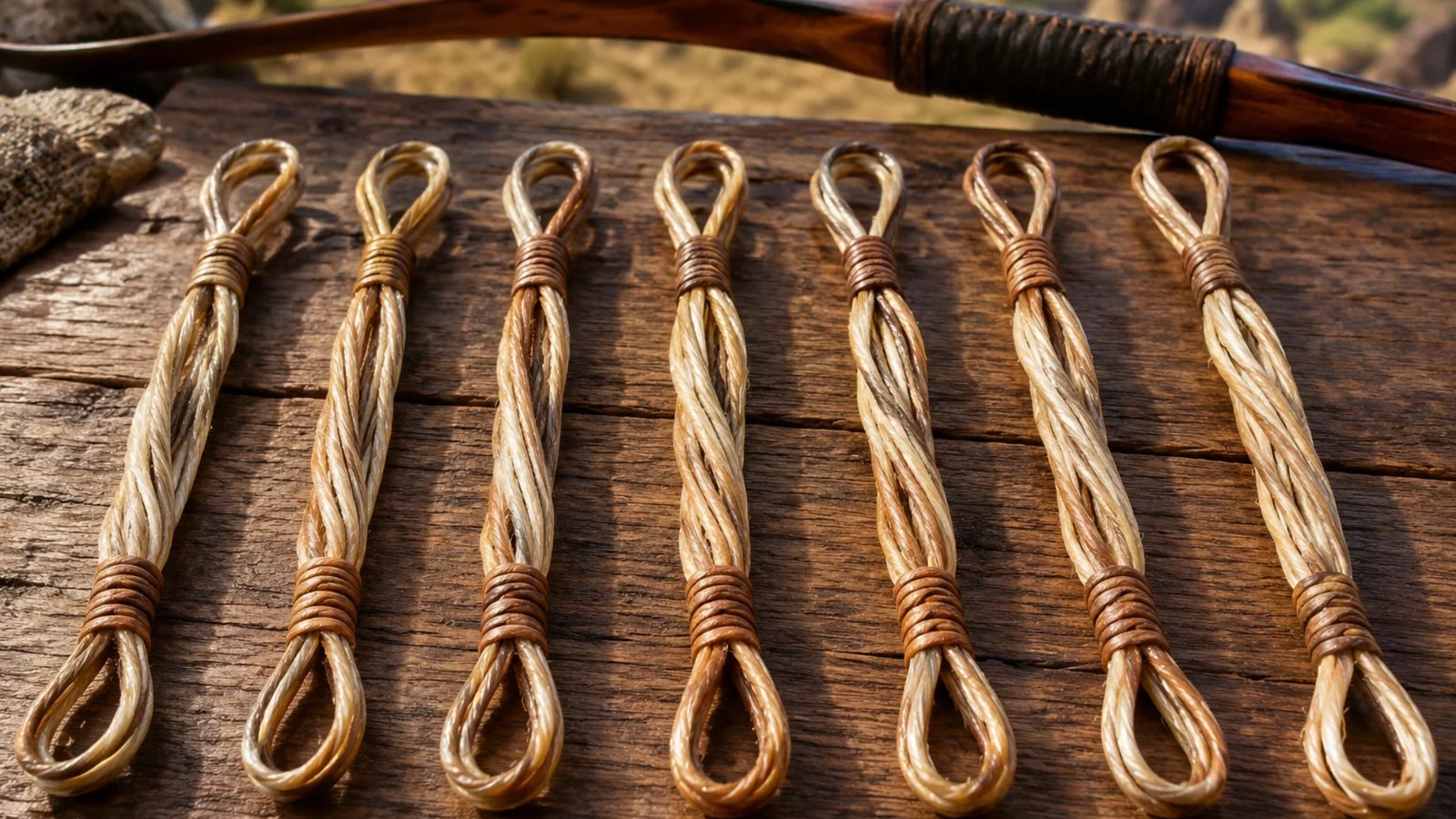
There is an interesting detail in the story of Samson that can easily be overlooked. When Delilah asked Samson about the source of his strength, he told her, “If anyone ties me with seven fresh bowstrings that have not been dried, I’ll become as weak as any other man” (Judges 16:7).
It is a strange statement. Why seven? Why fresh bowstrings? And what can this teach us spiritually?
We must be careful not to force symbolism where Scripture does not explicitly give it. The Bible does not say that the “seven fresh bowstrings” represent a particular spiritual principle. Yet the imagery gives us something powerful to reflect upon.
The enemy will often try a new strategy when the old one fails.
Samson was not dealing with one attempt to discover his weakness. Delilah kept asking. She changed the approach. She tried to uncover the secret of his strength through persistence.
First came the seven fresh bowstrings.
Then new ropes.
Then weaving the seven locks of his hair.
The strategy kept changing.
This is important because spiritual warfare is not always obvious. Sometimes what did not work yesterday may be repackaged and presented differently today.
The enemy studies patterns.
The pressure may change, but the objective remains the same: to discover what can bind what God has empowered.
The bowstrings were fresh. They had not been dried. They appeared strong enough to restrain Samson.
But when the Philistines came, Samson broke them “as a piece of string snaps when it comes close to a flame” (Judges 16:9).
What looked strong was powerless against the strength God had given him.
There is something encouraging here.
Not everything that looks capable of binding you actually has authority over you.
Sometimes people encounter a new opposition and immediately assume, “This must be stronger than what I faced before.”
Not necessarily.
A new strategy does not mean a greater authority.
A new attack does not mean God has become weaker.
A new obstacle does not mean your calling has been cancelled.
The bowstrings were fresh—but Samson’s strength was older than the attack.
His strength was connected to a divine covenant and calling.
The number seven is also significant throughout Scripture. It frequently appears in contexts of completeness, fullness, or divine order. Again, Judges 16 does not explicitly say that the seven bowstrings symbolize these things. But devotionally, the picture is striking: even what appears complete and carefully designed to restrain you can still fail when it confronts the strength God has supplied.
The enemy may prepare seven bowstrings.
God may still give you strength to break them.
There is another dimension to this story.
Samson did not lose his strength because the Philistines suddenly became stronger. His downfall came when he gradually surrendered the secret connected to his consecration.
This means the greatest danger was not necessarily the bowstrings around him.
It was what was happening within him.
External opposition could not defeat Samson until internal compromise weakened him.
That is a serious spiritual lesson.
We can spend so much time fighting what is outside us that we fail to examine what is happening inside us.
The question is not only, “Who is trying to bind me?”
Sometimes the more important question is, “What am I surrendering that gives the enemy access to me?”
Samson broke the bowstrings.
He broke the ropes.
He escaped the schemes.
But eventually, through repeated compromise, he moved dangerously close to revealing what should have remained sacred.
The story therefore carries both encouragement and warning.
Be encouraged because fresh attacks do not automatically mean fresh defeat.
But be warned because spiritual strength must be guarded.
The enemy may not be able to break your consecration, so he may try to convince you to give it away.
The seven fresh bowstrings could not hold Samson.
The ropes could not hold him.
The schemes could not hold him.
But compromise eventually opened a door that physical restraints could not open.
This is why believers must understand that divine strength is not permission for careless living.
Grace gives strength, but consecration protects what grace has entrusted to you.
Samson’s story ultimately points us beyond Samson himself. Our confidence is not supposed to rest in our natural strength, personality, intelligence, influence, or ability to escape difficult situations.
Our strength comes from God.
As Zechariah 4:6 declares:
“Not by might nor by power, but by my Spirit, says the LORD.”
There may be fresh bowstrings in your life right now.
A new pressure.
A new temptation.
A new opposition.
A new disappointment.
A new strategy designed to make you doubt what God has placed inside you.
But do not assume that because the strategy is new, the enemy has become sovereign.
He has not.
The God who strengthened you before is still God now.
The bowstrings may be fresh.
The ropes may be new.
The strategy may be different.
But God’s power has not changed.
The deeper question is whether we will remain surrendered to Him.
Because sometimes the greatest victory is not merely breaking the bowstrings.
It is refusing to surrender the consecration that gives us strength to break them.
Fresh bowstrings cannot defeat a life that remains anchored in God.










